
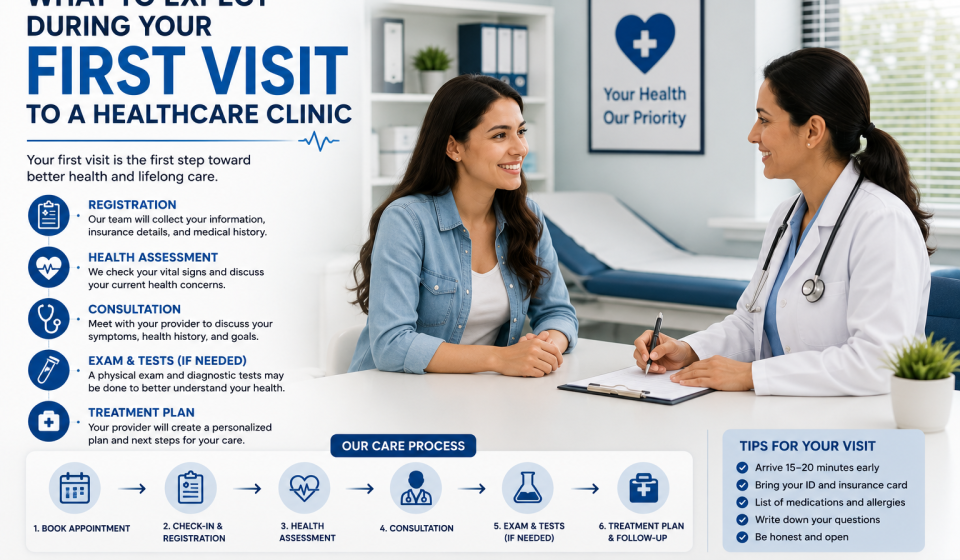

Prepare for your first healthcare clinic visit with this complete guide covering appointments, medical history, physical exams, diagnostic tests, and more.
Visiting a healthcare clinic for the first time can be an unfamiliar experience, especially if you’re unsure about the process or what to bring. Whether you’re scheduling a routine health checkup, seeking treatment for a medical concern, or establishing care with a new healthcare provider, understanding what happens during your first visit can help you feel more prepared and confident.Healthcare clinics are designed to provide accessible, high-quality medical care for individuals and families. During your first appointment, healthcare professionals gather important information about your medical history, assess your current health, discuss any symptoms or concerns, and develop a personalized care plan tailored to your needs.
Why Your First Clinic Visit Is Important
Your first appointment lays the foundation for your ongoing healthcare.
It allows your healthcare provider to:
- Learn about your medical history.
- Understand your current health concerns.
- Assess your overall health.
- Identify potential health risks.
- Establish a long-term healthcare relationship.
- Develop a personalized treatment plan.
This initial visit helps ensure future medical decisions are based on a complete understanding of your health.
Scheduling Your Appointment
Most healthcare clinics make scheduling simple through phone calls, online booking systems, or mobile apps.
When booking your appointment, you may be asked to provide:
- Your full name
- Date of birth
- Contact information
- Insurance details
- Reason for your visit
- Preferred appointment date and time
If you’re experiencing urgent symptoms, inform the clinic so they can determine the appropriate level of care.
Preparing Before Your Visit
Proper preparation helps your healthcare provider deliver the best possible care.
Before your appointment, gather:
- Government-issued identification
- Health insurance card
- Previous medical records (if available)
- List of current medications
- Allergy information
- Vaccination records
- Family medical history
It’s also helpful to write down any symptoms, concerns, or questions you want to discuss during your visit.
Arriving at the Healthcare Clinic
Plan to arrive at least 15–20 minutes before your scheduled appointment.
Upon arrival, you’ll typically:
- Check in at the reception desk.
- Complete patient registration forms.
- Verify insurance information.
- Sign consent documents.
- Review privacy policies.
The administrative staff will create your patient record and prepare your information for the healthcare provider.
Completing Your Medical History
One of the most important parts of your first visit is providing accurate medical information.
You’ll likely be asked about:
- Previous illnesses
- Surgeries
- Current medications
- Allergies
- Family medical history
- Lifestyle habits
- Smoking or alcohol use
- Existing medical conditions
Providing complete and honest information helps your provider make informed medical decisions
Initial Health Assessment
Before seeing the doctor, a nurse or medical assistant will usually perform a basic health assessment.
This often includes:
- Blood pressure measurement
- Heart rate
- Body temperature
- Height and weight
- Body Mass Index (BMI)
- Oxygen saturation
These measurements provide important baseline information about your overall health.
Meeting Your Healthcare Provider
During the consultation, your healthcare provider will discuss:
- Your reason for visiting
- Current symptoms
- Medical history
- Family health history
- Lifestyle habits
- Mental and emotional well-being
Feel free to ask questions and share any concerns openly. Clear communication helps your provider understand your healthcare needs.
Physical Examination
Depending on the purpose of your visit, your healthcare provider may perform a physical examination.
This may include checking:
- Heart and lungs
- Eyes, ears, nose, and throat
- Abdomen
- Skin
- Reflexes
- Muscles and joints
The examination helps identify any signs of illness or underlying medical conditions.
Diagnostic Tests and Screenings
If additional evaluation is needed, your provider may recommend diagnostic testing.
Common tests include:
- Blood tests
- Urine analysis
- Blood glucose testing
- Cholesterol screening
- Pregnancy testing
- Imaging referrals
- Electrocardiogram (ECG)
These tests provide valuable information for accurate diagnosis and treatment planning.
Discussing Your Treatment Plan
After evaluating your health, your provider will explain the next steps.
Your personalized care plan may include:
- Prescription medications
- Lifestyle recommendations
- Preventive healthcare
- Follow-up appointments
- Specialist referrals
- Additional laboratory testing
Be sure you understand your treatment plan before leaving the clinic.
Asking Questions During Your Visit
Your first appointment is an excellent opportunity to learn more about your health.
Consider asking questions such as:
- What is causing my symptoms?
- Are additional tests necessary?
- What treatment options are available?
- Are there any medication side effects?
- How can I improve my overall health?
- When should I schedule a follow-up visit?
Never hesitate to ask for clarification if something is unclear.
Follow-Up Care
Your healthcare journey doesn’t end after the first appointment.
Follow-up care may involve:
- Reviewing test results
- Monitoring symptoms
- Adjusting medications
- Managing chronic conditions
- Preventive health screenings
- Annual wellness visits
Regular follow-up appointments help maintain your long-term health.
Tips for a Successful First Clinic Visit
To get the most from your appointment:
- Arrive early.
- Bring all required documents.
- Be honest about your health.
- Ask questions.
- Follow your treatment plan.
- Schedule recommended follow-up visits.
- Keep copies of important medical records.
Being prepared improves communication and leads to better healthcare outcomes.
source
https://l1nq.com/nni17zh
https://l1nq.com/fs1snbl
https://l1nq.com/iid5ogo
https://l1nq.com/a1lymo4
Conclusion
Your first visit to a healthcare clinic is an important step toward building a strong foundation for lifelong health. From registration and medical history to physical examinations and personalized treatment plans, every part of the appointment is designed to help healthcare providers understand your unique needs and deliver the best possible care.
By preparing in advance, bringing the necessary documents, and communicating openly with your healthcare provider, you can make your first clinic visit a positive and productive experience. Regular healthcare appointments also play a key role in preventing disease, detecting medical conditions early, and maintaining overall wellness.
Whether you’re visiting for a routine checkup or addressing a specific health concern, understanding what to expect helps you feel more confident and ensures you receive the care you need. Taking this first step toward proactive healthcare can have lasting benefits for your health and well-being.
FAQs
1. What should I bring to my first healthcare clinic visit?
Bring a government-issued ID, insurance card, list of medications, allergy information, previous medical records, vaccination history, and any questions you want to ask your healthcare provider.
2. How early should I arrive for my appointment?
It’s recommended to arrive 15–20 minutes before your scheduled appointment to complete registration forms and verify your information.
3. What happens during a first clinic visit?
Your visit typically includes registration, medical history review, vital sign measurements, a consultation with your healthcare provider, a physical examination, and possibly diagnostic testing.
4. Will I need laboratory tests?
Not always. Your healthcare provider will recommend blood tests, urine tests, or other diagnostic screenings only if they are necessary based on your symptoms or health history.
5. Can I ask questions during my appointment?
Yes. You should ask questions about your diagnosis, treatment options, medications, lifestyle recommendations, and follow-up care to better understand your health.