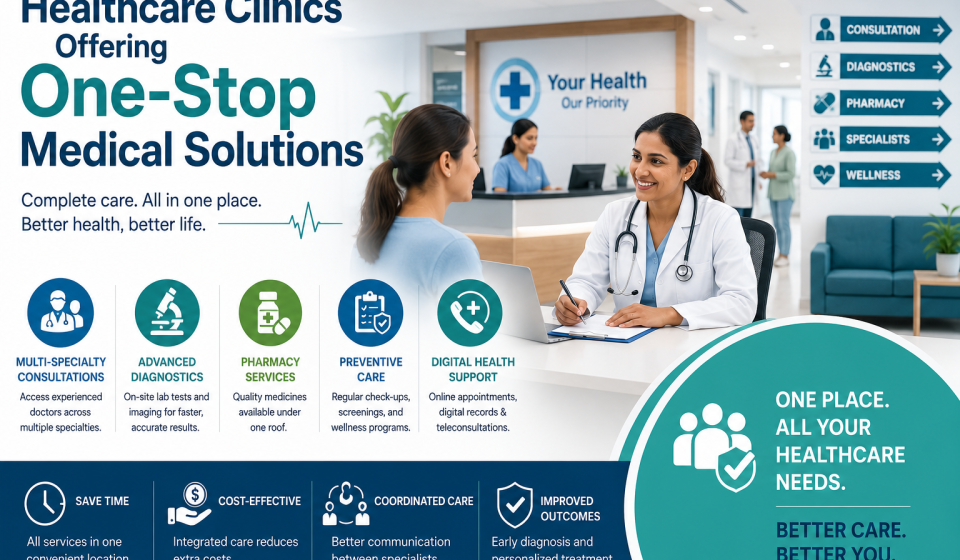

Healthcare clinics offering one-stop solutions are designed to provide everything from diagnosis and consultation to treatment, preventive care, and follow-up services. This integrated approach improves patient experience while ensuring better health outcomes.
Modern healthcare is rapidly evolving to meet the growing expectations of patients who want faster, more convenient, and more comprehensive care. Instead of visiting multiple hospitals and specialists separately, many people now prefer healthcare clinics that offer one-stop medical solutions. These clinics bring together multiple services under one roof, making healthcare simpler, more efficient, and more accessible.
What Are One-Stop Healthcare Clinics?
One-stop healthcare clinics are modern medical facilities that provide a wide range of healthcare services in a single location. Instead of referring patients to different centers for tests, consultations, or treatments, these clinics manage most needs internally.
They typically include general physicians, specialists, diagnostic labs, pharmacy services, minor emergency care, and preventive health programs.
The goal is simple: reduce complexity for patients and ensure they receive complete care without unnecessary delays or travel.
This model is especially beneficial for patients with chronic conditions, elderly individuals, and busy professionals who need efficient healthcare access.
Key Features of One-Stop Medical Solution Clinics
One-stop healthcare clinics are built around convenience and efficiency. Some of their most important features include:
1. Multi-Specialty Services
Patients can consult different specialists such as cardiologists, dermatologists, pediatricians, and general physicians within the same clinic.
2. In-House Diagnostics
Laboratory tests, blood work, imaging, and screenings are conducted on-site, reducing waiting time and improving accuracy.
3. Pharmacy Access
Many clinics include in-house pharmacies so patients can immediately get prescribed medications.
4. Digital Health Records
Electronic medical records allow doctors to access patient history instantly, improving diagnosis and continuity of care.
5. Preventive Care Programs
Regular health check-ups, screenings, and wellness programs help detect diseases early.
These features ensure that patients receive complete healthcare without needing to visit multiple facilities.
Benefits of One-Stop Healthcare Clinics
One-stop medical clinics offer several advantages that make them increasingly popular among patients worldwide.
1. Convenience and Time Savings
Patients do not need to travel between different hospitals or labs. Everything is available in one place, saving both time and effort.
2. Better Coordination of Care
Since all services are integrated, doctors can communicate easily with specialists and lab technicians, leading to more accurate diagnosis and treatment.
3. Cost-Effective Healthcare
Bundled services and reduced duplication of tests often make treatment more affordable compared to visiting separate facilities.
4. Faster Diagnosis and Treatment
On-site testing and consultations speed up the entire healthcare process, allowing quicker medical decisions.
5. Improved Patient Experience
Patients feel more comfortable and supported when they receive continuous care from a single coordinated system.
Role of Technology in Modern Healthcare Clinics
Technology plays a crucial role in making one-stop healthcare clinics efficient and patient-friendly.
Digital tools such as electronic health records, AI-based diagnostic systems, and telemedicine platforms help doctors deliver faster and more accurate care.
Patients can also book appointments online, receive test results digitally, and even consult doctors remotely when needed.
Advanced diagnostic equipment improves early detection of diseases, which is critical for effective treatment and long-term health management.
By integrating technology into daily operations, healthcare clinics improve both speed and quality of care.
Preventive Care and Wellness Focus
One of the strongest advantages of one-stop healthcare clinics is their focus on preventive care rather than just treatment.
These clinics encourage regular health check-ups, lifestyle assessments, vaccinations, and early screenings. This helps in identifying health risks before they become serious problems.
Preventive care programs often include:
- Blood pressure and diabetes screening
- Heart health monitoring
- Nutrition and diet counseling
- Stress management programs
- Fitness and wellness guidance
This proactive approach reduces long-term healthcare costs and improves overall quality of life.
Importance of Patient-Centered Care
One-stop healthcare clinics emphasize patient-centered care, meaning the patient is always at the center of every decision.
Doctors take time to understand patient concerns, explain treatment options clearly, and involve patients in decision-making.
This approach builds trust and improves treatment adherence. When patients understand their health conditions better, they are more likely to follow medical advice and maintain healthier lifestyles.
Patient-centered care also ensures emotional support, which is an important part of healing and recovery.
Challenges and Future of One-Stop Healthcare Clinics
While one-stop healthcare clinics offer many benefits, they also face some challenges.
High setup costs, need for advanced technology, and requirement for skilled professionals can make it difficult for smaller clinics to adopt this model.
However, the future of healthcare is moving strongly toward integrated care systems. With advancements in digital health, AI diagnostics, and telemedicine, one-stop clinics are expected to become more common and accessible.
In the future, we may see fully digital-integrated clinics where patients can access almost all healthcare services seamlessly in one ecosystem.
source
https://sl1nk.com/devv3sk
https://sl1nk.com/5lauu1a
https://sl1nk.com/0ybyshc
https://l1nq.com/1lr2gmo
Conclusion
Healthcare clinics offering one-stop medical solutions represent a major shift in how healthcare is delivered. By combining multiple services under one roof, they provide convenience, efficiency, affordability, and better coordination of care.
With strong support from technology and a focus on preventive and patient-centered care, these clinics are shaping the future of modern healthcare. They not only treat illnesses but also help patients maintain long-term wellness, making healthcare simpler and more effective for everyone.
FAQs
1. What is a one-stop healthcare clinic?
It is a medical facility that offers multiple healthcare services such as consultations, diagnostics, pharmacy, and treatment in one place.
2. What are the benefits of one-stop medical clinics?
They offer convenience, faster diagnosis, better coordination, and often lower healthcare costs.
3. Are one-stop clinics suitable for chronic diseases?
Yes, they are ideal for chronic conditions as they provide continuous monitoring and integrated care.
4. Do these clinics use modern technology?
Yes, most modern clinics use digital records, AI tools, and telemedicine services.
5. How do one-stop clinics improve patient experience?
They reduce travel, waiting time, and confusion by providing all services under one roof with coordinated care.