
In today’s fast-paced world, many adults focus on treating health problems only after symptoms appear. However, preventive healthcare plays a crucial role in maintaining overall wellness and detecting potential health issues before they become serious. One of the most effective ways to protect your health is through regular health screenings.
Health screenings help identify risk factors, detect diseases early, and provide valuable insights into your overall well-being. Early detection often leads to more effective treatment, lower healthcare costs, and improved quality of life.
This guide explores the essential health screenings every adult should consider and why they are important for long-term health.
What Are Health Screenings?
Health screenings are medical tests, examinations, or assessments designed to detect diseases, health conditions, or risk factors before symptoms develop. These screenings help healthcare providers identify potential issues early, allowing for timely intervention and treatment.
Regular screenings can help detect conditions such as:
- High blood pressure
- Diabetes
- Heart disease
- Certain cancers
- Osteoporosis
- Vision and hearing problems
- Cholesterol abnormalities
Preventive screenings are a key component of maintaining a healthy lifestyle and reducing the risk of serious complications.
Why Are Regular Health Screenings Important?
Many serious health conditions develop gradually and may not show obvious symptoms in their early stages. By the time symptoms appear, treatment may become more complex.
Benefits of regular health screenings include:
- Early disease detection
- Better treatment outcomes
- Lower risk of complications
- Improved quality of life
- Reduced healthcare expenses
- Greater awareness of personal health risks
Taking a proactive approach to healthcare can significantly improve long-term health outcomes.
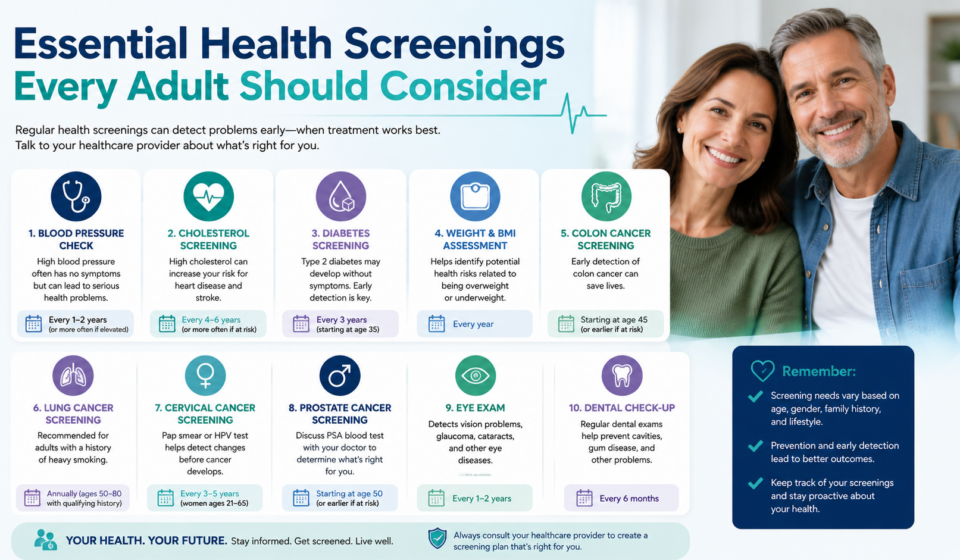
1. Blood Pressure Screening
High blood pressure, also known as hypertension, is often called the “silent killer” because it typically causes no noticeable symptoms. Left untreated, it can increase the risk of heart disease, stroke, and kidney damage.
Who Should Get Screened?
All adults should have their blood pressure checked regularly, especially those with risk factors such as:
- Obesity
- Smoking
- Family history of hypertension
- Sedentary lifestyle
- Diabetes
Why It Matters
Early detection allows lifestyle changes and treatment to reduce the risk of serious cardiovascular complications.
2. Cholesterol Screening
Cholesterol is a fatty substance found in the blood. High cholesterol levels can contribute to plaque buildup in arteries, increasing the risk of heart attacks and strokes.
What Is Checked?
A lipid profile typically measures:
- Total cholesterol
- LDL (bad cholesterol)
- HDL (good cholesterol)
- Triglycerides
Benefits of Screening
Monitoring cholesterol levels helps healthcare providers recommend dietary changes, exercise, and medications when necessary.
3. Blood Sugar and Diabetes Screening
Diabetes affects millions of adults worldwide and can lead to serious complications if left unmanaged.
Common Tests Include
- Fasting blood glucose test
- HbA1c test
- Oral glucose tolerance test
Who Is at Risk?
Adults with the following risk factors should be screened regularly:
- Excess body weight
- Family history of diabetes
- High blood pressure
- Physical inactivity
Importance of Early Detection
Early diagnosis allows individuals to manage blood sugar levels and prevent complications such as nerve damage, kidney disease, and vision problems.
4. Cancer Screenings
Cancer screenings are among the most valuable preventive healthcare tools available today. Detecting cancer in its early stages often improves treatment success rates significantly.
Breast Cancer Screening
Women should discuss mammograms with their healthcare provider based on age, family history, and individual risk factors.
Cervical Cancer Screening
Regular Pap tests and HPV screenings help detect abnormal cell changes before they become cancerous.
Colorectal Cancer Screening
Adults should consider colorectal cancer screening through methods such as:
- Colonoscopy
- Stool-based tests
- Flexible sigmoidoscopy
Prostate Cancer Screening
Men should consult their healthcare provider regarding prostate-specific antigen (PSA) testing based on personal risk factors.
Skin Cancer Screening
Routine skin examinations can help detect suspicious moles or skin changes early.
5. Body Mass Index (BMI) and Weight Assessment
Maintaining a healthy weight is important for preventing numerous chronic conditions.
Why Monitor Weight?
Excess weight is associated with:
- Heart disease
- Type 2 diabetes
- Hypertension
- Sleep apnea
- Joint problems
Regular weight assessments can help identify trends and encourage healthier lifestyle choices.
6. Vision Screening
Eye health is often overlooked until problems become noticeable. Regular vision screenings can detect:
- Glaucoma
- Cataracts
- Macular degeneration
- Refractive errors
Signs You Should Not Ignore
- Blurred vision
- Eye strain
- Frequent headaches
- Difficulty seeing at night
Routine eye examinations help preserve vision and identify underlying health conditions.
7. Hearing Screening
Hearing loss can develop gradually, making it difficult to recognize in its early stages.
Benefits of Hearing Tests
Early detection can improve:
- Communication
- Social interactions
- Workplace performance
- Overall quality of life
Adults experiencing difficulty hearing conversations or frequent ringing in the ears should seek evaluation.
8. Bone Density Screening
Bone density testing helps identify osteoporosis, a condition that weakens bones and increases fracture risk.
Who Should Consider Screening?
- Postmenopausal women
- Older adults
- Individuals with a family history of osteoporosis
- Those taking certain medications that affect bone health
Why It Matters
Early detection allows preventive measures that help maintain bone strength and reduce fracture risk.
9. Mental Health Screening
Mental health is just as important as physical health. Conditions such as depression, anxiety, and stress-related disorders can affect overall well-being.
Common Mental Health Assessments
Healthcare providers may use questionnaires and evaluations to identify symptoms and determine whether further support is needed.
Benefits of Early Intervention
Addressing mental health concerns early can improve:
- Emotional well-being
- Relationships
- Productivity
- Physical health outcomes
10. Thyroid Function Screening
The thyroid gland regulates many important bodily functions, including metabolism and energy production.
Symptoms of Thyroid Disorders
- Fatigue
- Weight changes
- Mood swings
- Hair loss
- Sensitivity to temperature
Thyroid screening may help identify conditions such as hypothyroidism or hyperthyroidism before symptoms become severe.
11. Dental Health Examinations
Oral health is closely linked to overall health. Regular dental visits can help detect:
- Cavities
- Gum disease
- Oral infections
- Oral cancer
Why Dental Screenings Matter
Poor oral health has been associated with:
- Heart disease
- Diabetes complications
- Respiratory infections
Routine dental care supports long-term wellness.
12. Vaccination Reviews and Preventive Care Assessments
While not traditionally considered a screening test, reviewing immunization status is an important part of preventive healthcare.
Adults should stay updated on recommended vaccines, including:
- Influenza vaccine
- COVID-19 vaccines
- Tetanus boosters
- Shingles vaccine
- Pneumococcal vaccine
Preventive care assessments also allow healthcare providers to identify lifestyle risk factors and recommend appropriate interventions.
How Often Should Adults Get Health Screenings?
The frequency of health screenings depends on several factors:
- Age
- Gender
- Family medical history
- Lifestyle habits
- Existing medical conditions
Your healthcare provider can create a personalized screening schedule based on your individual health profile.
Tips for Maintaining Better Health Between Screenings
Health screenings are most effective when combined with healthy lifestyle habits.
Consider These Healthy Practices:
- Eat a balanced diet rich in fruits and vegetables
- Exercise regularly
- Maintain a healthy weight
- Avoid tobacco products
- Limit alcohol consumption
- Manage stress effectively
- Get adequate sleep
- Stay hydrated
Small daily habits can have a significant impact on long-term health outcomes.
The Role of Preventive Healthcare in Modern Medicine
Preventive healthcare focuses on stopping diseases before they develop or progress. Regular screenings are one of the most powerful tools in preventive medicine because they provide opportunities for early detection and intervention.
By identifying health concerns early, individuals can take proactive steps to improve outcomes, reduce risks, and enjoy a higher quality of life.
Conclusion
Regular health screenings are an essential part of maintaining lifelong wellness. From blood pressure checks and cholesterol testing to cancer screenings and mental health assessments, these preventive measures help detect potential health concerns before they become serious.
Every adult should work closely with a healthcare provider to determine which screenings are appropriate based on age, lifestyle, and medical history. Investing in preventive healthcare today can lead to better health, fewer complications, and greater peace of mind in the future.
Prioritizing regular health screenings is one of the smartest decisions you can make for your long-term well-being. Schedule your next health checkup and take an active role in protecting your health for years to come.