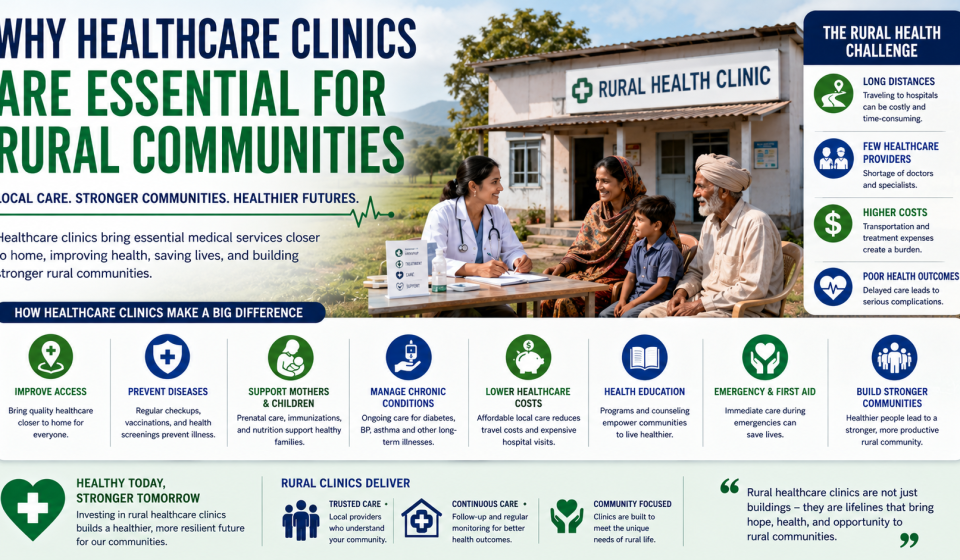

Healthcare clinics play a very important role in rural communities. In many villages, small towns, and remote areas, people may live far away from large hospitals or specialist medical centers. Because of this, local healthcare clinics often become the first and most trusted place for medical help.
Improving Access to Medical Care
One of the biggest reasons healthcare clinics are essential in rural communities is accessibility. Many rural patients cannot easily travel to big hospitals due to distance, cost, or lack of transport.
Local clinics bring medical care closer to people. Patients can visit for fever, infections, minor injuries, blood pressure checks, diabetes testing, pregnancy care, and routine health concerns.
Easy access to care helps people receive treatment early instead of waiting until a condition becomes serious.
Reducing the Burden on Hospitals
Hospitals are often located far from rural areas and may already be overcrowded. Healthcare clinics reduce this pressure by treating common and non-emergency conditions locally.
When clinics manage basic health issues, hospitals can focus on critical cases, surgeries, and emergency treatment. This improves the overall healthcare system and helps patients get the right care at the right place.
Clinics act as a strong support system between rural patients and larger hospitals.
Providing Preventive Healthcare
Preventive care is very important for rural communities. Many serious diseases can be avoided or controlled if detected early.
Healthcare clinics provide preventive services such as health screenings, vaccinations, regular checkups, nutrition advice, blood sugar tests, and blood pressure monitoring.
These services help detect health risks before they become dangerous. Preventive care also reduces long-term treatment costs and improves community health.
Supporting Maternal and Child Health
Rural clinics are especially important for mothers and children. Pregnant women need regular checkups, nutrition guidance, and medical support to ensure safe pregnancy and delivery.
Healthcare clinics provide prenatal care, child vaccinations, growth monitoring, family planning advice, and newborn care.
These services help reduce risks for mothers and children and support healthier families in rural areas.
Managing Chronic Diseases
Chronic diseases such as diabetes, asthma, hypertension, heart disease, and arthritis are common in many communities. These conditions need regular monitoring and long-term care.
Rural healthcare clinics help patients manage chronic diseases through follow-up visits, medication guidance, lifestyle counseling, and health tracking.
Without local clinics, many patients may ignore their condition until it becomes severe. Regular care helps prevent complications and improves quality of life.
Making Healthcare More Affordable
Healthcare expenses can be a major challenge for rural families. Traveling to distant hospitals can increase costs for transport, food, lost wages, and treatment.
Local healthcare clinics reduce these expenses by providing affordable care near home. Many clinics offer low-cost services, basic medicines, and preventive care programs.
Affordable healthcare helps families seek treatment without financial stress.
H2: Health Education and Awareness
Healthcare clinics also educate rural communities about healthy living. Many people may not know the importance of regular checkups, vaccination, hygiene, nutrition, mental health, and disease prevention.
Clinic staff can guide patients about healthy habits, medication use, family planning, sanitation, and early warning signs of illness.
Health education empowers people to make better decisions and prevent diseases before they spread.
Emergency First Aid and Early Treatment
In rural areas, reaching a hospital during an emergency may take time. Healthcare clinics provide first aid and early treatment for injuries, infections, dehydration, fever, allergic reactions, and other urgent conditions.
Although clinics may not replace hospitals for major emergencies, they can stabilize patients and guide them for further care.
This early response can save lives, especially when hospitals are far away.
Supporting Mental Health in Rural Areas
Mental health support is often limited in rural communities. Many people may hesitate to talk about stress, anxiety, depression, or emotional problems.
Healthcare clinics can provide basic mental health screening, counseling, support, and referrals to specialists when needed.
By making mental health care more accessible, clinics help improve emotional well-being and reduce stigma.
Helping Elderly Patients
Rural communities often have many elderly people who need regular medical attention. Traveling long distances can be difficult for older adults.
Local clinics help elderly patients with regular checkups, medicine reviews, blood pressure monitoring, diabetes care, pain management, and mobility-related health concerns.
This support allows elderly patients to receive care with dignity and comfort.
Building Trust in the Community
Healthcare clinics are deeply connected with local communities. Patients often know the doctors, nurses, and health workers personally. This trust encourages people to seek care earlier and follow medical advice.
When healthcare providers understand local culture, language, and lifestyle, they can communicate better with patients.
Trust is one of the strongest reasons rural clinics are successful in improving public health.
Supporting Disease Control and Vaccination
Rural clinics play an important role in controlling infectious diseases. They provide vaccinations, health education, testing, and treatment for common infections.
During outbreaks, clinics help identify symptoms early and guide people on prevention. They also support public health programs and disease awareness campaigns.
This helps protect the entire community from preventable illnesses.
Improving Quality of Life
Good healthcare improves more than physical health. When people are healthier, they can work, study, care for their families, and participate in community life.
Healthcare clinics help rural communities become stronger by reducing illness, improving productivity, and supporting long-term wellness.
A healthy rural population also contributes to local economic growth and social stability.
Source
https://l1nq.com/xtu9plj
https://sl1nk.com/4kaj7ey
Conclusion
Healthcare clinics are essential for rural communities because they bring affordable, accessible, and reliable medical care closer to people. They support preventive care, maternal and child health, chronic disease management, emergency first aid, mental health, elderly care, and health education.
Without local clinics, many rural patients would delay treatment or face high costs traveling to distant hospitals. Clinics reduce this gap and help create healthier, stronger, and more informed communities.
Investing in rural healthcare clinics means investing in better public health, stronger families, and a healthier future for rural areas.
FAQs
1. Why are healthcare clinics important in rural communities?
Healthcare clinics provide nearby, affordable, and essential medical care for people who may live far from hospitals.
2. What services do rural healthcare clinics provide?
They provide checkups, vaccinations, minor illness treatment, maternal care, child health services, chronic disease management, and health education.
3. How do clinics help reduce healthcare costs?
Clinics reduce travel expenses, offer affordable treatment, and provide preventive care that helps avoid costly hospital visits.
4. Can rural clinics handle emergencies?
Rural clinics can provide first aid and early treatment, but serious emergencies may require referral to a hospital.
5. How do clinics improve public health in rural areas?
They improve public health through prevention, early diagnosis, vaccination, disease control, and health awareness programs.