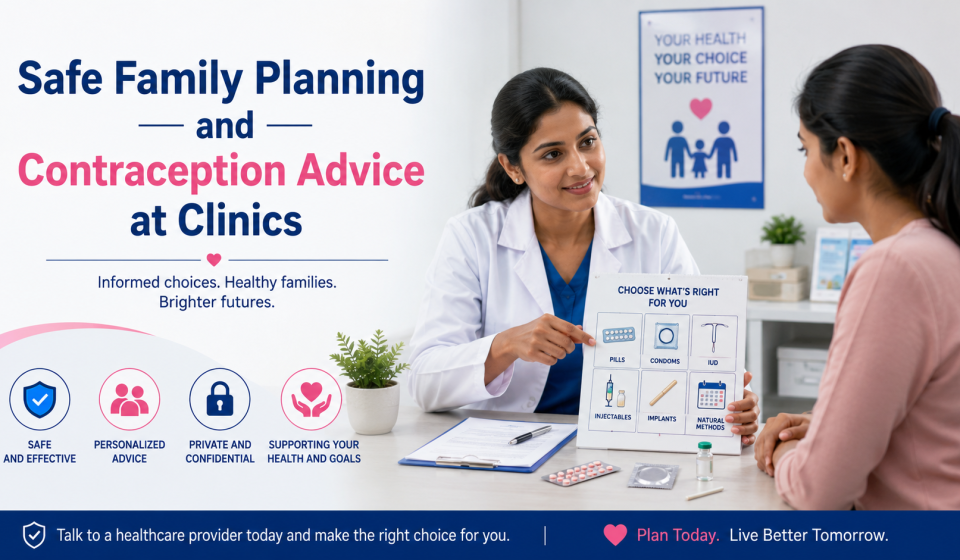

Learn about safe family planning and contraception advice available at clinics. Discover different birth control methods, benefits of professional guidance, and how clinics help individuals and couples make informed reproductive health decisions.
Family planning is an important part of maintaining reproductive health and overall well-being. Whether a couple wants to delay pregnancy, space their children, or avoid pregnancy altogether, choosing the right contraception method is essential. However, with so many options available today, selecting the most suitable method can sometimes feel confusing.
This is where healthcare clinics play a vital role. Clinics provide professional family planning and contraception advice based on an individual’s age, health condition, lifestyle, and future pregnancy goals. Through proper counseling and medical guidance, clinics help people make informed decisions that support their personal and family health objectives.
In India and around the world, family planning services have become an important component of preventive healthcare. These services not only help prevent unintended pregnancies but also contribute to healthier pregnancies, improved maternal health, and better quality of life for families.
Understanding Family Planning
Family planning refers to the ability of individuals and couples to decide when and how many children they want to have. It involves using contraceptive methods and receiving reproductive health education to achieve desired family goals.
Family planning is not only about preventing pregnancy. It also includes:
- Planning pregnancy at the right age
- Spacing births safely
- Improving maternal and child health
- Managing reproductive health concerns
- Supporting informed healthcare decisions
For example, a newly married couple may decide to wait a few years before having children while they focus on their careers and financial stability. Proper family planning advice can help them choose a safe and effective contraceptive option during this period.
Why Family Planning Matters
Effective family planning offers numerous health, social, and economic benefits.
1. Better Maternal Health
Pregnancies that are closely spaced can increase health risks for both the mother and baby. Family planning allows women to recover physically before another pregnancy.
2. Improved Child Health
Studies have shown that children born after adequate birth spacing often experience better health outcomes and development.
3. Financial Stability
Planning a family helps couples prepare financially for raising children and managing household expenses.
4. Reduced Unplanned Pregnancies
Access to reliable contraception significantly lowers the risk of unintended pregnancies and associated complications.
5. Greater Educational and Career Opportunities
Family planning allows individuals to pursue education and career goals before starting or expanding a family.
The Role of Clinics in Family Planning
Modern healthcare clinics provide comprehensive family planning services designed to meet the needs of individuals and couples.
A clinic’s family planning consultation typically includes:
- Medical history review
- Discussion of pregnancy goals
- Assessment of health conditions
- Counseling on available contraceptive options
- Guidance on effectiveness and side effects
- Follow-up support
Healthcare professionals help patients understand which contraception method may work best based on their specific circumstances.
For instance, a woman with certain medical conditions may not be advised to use hormone-based contraceptives, while another patient may find them highly suitable.
Common Contraception Methods Offered Through Clinics
Clinics provide information and access to a variety of contraception methods.
1. Condoms
Condoms are among the most commonly used contraceptives.
Benefits:
- Easily available
- Non-hormonal
- Protect against sexually transmitted infections (STIs)
- Affordable and convenient
Considerations:
- Must be used correctly every time
- May occasionally break or slip if not used properly
Many clinics recommend condoms as part of safe sexual health practices.
2. Oral Contraceptive Pills
Birth control pills contain hormones that prevent pregnancy by stopping ovulation.
Benefits:
- Highly effective when taken correctly
- Can regulate menstrual cycles
- May reduce menstrual pain
Considerations:
- Must be taken daily
- Not suitable for everyone
A healthcare provider can evaluate whether oral contraceptives are appropriate for a patient’s health profile.
3. Intrauterine Devices (IUDs)
IUDs are small devices inserted into the uterus by trained healthcare professionals.
Types include:
- Copper IUD
- Hormonal IUD
Benefits:
- Long-term protection
- Highly effective
- Low maintenance
Considerations:
- Requires clinic insertion
- May cause temporary discomfort after placement
Many women prefer IUDs because they provide years of contraception without daily attention.
4. Injectable Contraceptives
These injections prevent pregnancy for several months at a time.
Benefits:
- Convenient
- Highly effective
- Does not require daily action
Considerations:
- Requires regular clinic visits
- May cause menstrual changes
Healthcare providers explain the schedule and possible side effects before starting treatment.
5. Contraceptive Implants
A small flexible rod is placed under the skin of the arm.
Benefits:
- Long-lasting protection
- Highly effective
- Reversible
Considerations:
- Requires insertion and removal by trained professionals
Implants have become increasingly popular among women seeking long-term contraception.
6. Emergency Contraception
Emergency contraception may help prevent pregnancy after unprotected intercourse or contraceptive failure.
Benefits:
- Can reduce the risk of unintended pregnancy
- Available through healthcare providers and pharmacies
Important Note:
Emergency contraception should not replace regular birth control methods.
Clinics provide guidance on when and how emergency contraception should be used.
7. Permanent Contraception
Permanent options may be suitable for individuals or couples who do not want future pregnancies.
Examples include:
- Female sterilization
- Male vasectomy
Benefits:
- Long-term solution
- Highly effective
Considerations:
- Usually considered permanent
- Requires careful counseling before the procedure
Clinics ensure patients fully understand the implications before making this decision.
How Clinics Help Patients Choose the Right Method
Every person’s healthcare needs are different.
A contraception method that works well for one individual may not be ideal for another. Healthcare providers consider several factors, including:
Age
Different methods may be more suitable at different stages of life.
Medical History
Conditions such as high blood pressure, diabetes, migraines, or blood clotting disorders can influence contraceptive choices.
Future Pregnancy Plans
Patients planning pregnancy in the near future may prefer easily reversible options.
Lifestyle
Busy schedules, travel frequency, and daily routines can affect method selection.
Personal Preferences
Comfort, convenience, and cultural or religious considerations are also important factors.
The goal is to find a safe and practical solution that aligns with each patient’s needs.
Family Planning Counseling for Couples
Family planning is often most successful when both partners participate in the discussion.
Many clinics encourage couples to attend consultations together.
Benefits of joint counseling include:
- Better communication
- Shared decision-making
- Increased understanding of contraceptive options
- Stronger support between partners
For example, a couple considering delaying pregnancy for three years may review several options together and choose a method that best suits their lifestyle and future plans.
Addressing Common Myths About Contraception
Despite growing awareness, misconceptions about contraception still exist.
Myth 1: Contraceptives Cause Permanent Infertility
Most modern contraceptive methods are reversible. Fertility typically returns after discontinuation.
Myth 2: Family Planning Is Only a Woman’s Responsibility
Both partners share responsibility for reproductive health decisions.
Myth 3: Young Healthy People Do Not Need Family Planning Advice
Anyone who is sexually active can benefit from professional reproductive health counseling.
Myth 4: Condoms Are Not Effective
When used correctly and consistently, condoms are highly effective and also help prevent STIs.
Myth 5: Family Planning Is Only About Preventing Pregnancy
Family planning also supports healthier pregnancies, maternal health, and overall family well-being.
Importance of Regular Follow-Up Visits
Family planning does not end after choosing a contraceptive method.
Regular clinic visits help healthcare providers:
- Monitor side effects
- Address concerns
- Review changing health needs
- Update contraception plans if necessary
For example, a woman using birth control pills may require periodic evaluations to ensure the method remains appropriate.
Follow-up care helps maintain both safety and effectiveness.
Family Planning and Women’s Health
Family planning services often improve overall women’s healthcare by providing opportunities for:
- Reproductive health screening
- Menstrual health management
- Pregnancy planning
- Preventive healthcare discussions
- Health education
Many women discover and address important health concerns during routine family planning consultations.
The Future of Family Planning Services
Healthcare clinics continue to improve access to family planning through:
- Telehealth consultations
- Digital appointment systems
- Personalized contraceptive counseling
- Expanded reproductive health education
These advancements make it easier for individuals and couples to access reliable family planning services while maintaining privacy and convenience.
As healthcare evolves, family planning remains a cornerstone of preventive and reproductive healthcare.
Sources
https://sl1nk.com/ophm1w3
https://sl1nk.com/7z0ilvz
Conclusion
Safe family planning and contraception advice provided by healthcare clinics empowers individuals and couples to make informed reproductive health decisions. From condoms and birth control pills to long-term contraceptive options and permanent solutions, clinics offer expert guidance tailored to each person’s unique needs.
Professional counseling helps patients understand available choices, evaluate benefits and risks, and select methods that align with their health goals and lifestyle. By promoting responsible family planning, healthcare clinics contribute to healthier families, improved maternal health, and better overall quality of life. Regular consultations and follow-up care ensure that contraception remains safe, effective, and suitable as life circumstances change.
Frequently Asked Questions (FAQs)
1. Why should I visit a clinic for family planning advice?
Clinics provide professional medical guidance, assess your health needs, explain available contraceptive options, and help you choose the safest and most effective method.
2. Which contraceptive method is the most effective?
Long-acting reversible contraceptives such as IUDs and implants are among the most effective options. However, the best choice depends on individual health needs and preferences.
3. Are birth control pills safe for long-term use?
For many healthy individuals, birth control pills can be used safely under medical supervision. A healthcare provider can determine whether they are appropriate for you.
4. Can contraception affect future fertility?
Most modern contraceptive methods are reversible, and fertility generally returns after stopping their use. Permanent methods such as sterilization are exceptions.
5. How often should I have a family planning consultation?
It is advisable to consult a healthcare provider whenever your reproductive goals change, you experience side effects, or during routine health check-ups.