High Blood Pressure Explained: 15 Powerful Ways to Prevent & Manage Hypertension Naturally

High Blood Pressure Explained: 15 Powerful Ways to Prevent & Manage Hypertension Naturally
High blood pressure, also known as hypertension, is one of the most common health conditions affecting millions of people worldwide. Often referred to as the “silent killer,” high blood pressure usually develops without noticeable symptoms but can significantly increase the risk of serious health problems such as heart disease, stroke, kidney failure, and vision loss.
The good news is that hypertension can often be prevented and effectively managed through healthy lifestyle choices, regular monitoring, and appropriate medical care.
In this comprehensive guide, we’ll explore everything you need to know about high blood pressure, including its causes, symptoms, risk factors, prevention strategies, and treatment options.
What Is High Blood Pressure?
Blood pressure is the force exerted by blood against the walls of your arteries as the heart pumps blood throughout the body.
Blood pressure readings are measured using two numbers:
Systolic Pressure
The top number indicates the pressure in your arteries when the heart beats.
Diastolic Pressure
The bottom number measures the pressure when the heart rests between beats.
A normal blood pressure reading is generally below 120/80 mmHg.
Blood Pressure Categories
- Normal: Below 120/80 mmHg
- Elevated: 120–129 / Below 80 mmHg
- Hypertension Stage 1: 130–139 / 80–89 mmHg
- Hypertension Stage 2: 140/90 mmHg or higher
- Hypertensive Crisis: Above 180/120 mmHg
Understanding these categories helps identify potential risks and determine when medical intervention is necessary.
Why Is High Blood Pressure Dangerous?
When blood pressure remains elevated for a prolonged period, it places excessive strain on blood vessels and vital organs.
Untreated hypertension can lead to:
- Heart attack
- Stroke
- Heart failure
- Kidney disease
- Vision problems
- Peripheral artery disease
- Cognitive decline
Because symptoms are often absent, many people are unaware they have hypertension until complications develop.
Common Causes of High Blood Pressure
Hypertension can develop due to various factors.
1. Unhealthy Diet
A diet high in:
- Salt
- Processed foods
- Saturated fats
- Sugary beverages
can contribute to elevated blood pressure levels.
2. Physical Inactivity
A sedentary lifestyle weakens cardiovascular health and increases the risk of hypertension.
3. Obesity
Excess body weight forces the heart to work harder, increasing blood pressure.
4. Smoking
Tobacco damages blood vessels and causes temporary spikes in blood pressure.
5. Excessive Alcohol Consumption
Heavy drinking may raise blood pressure and reduce the effectiveness of medications.
6. Chronic Stress
Long-term stress can contribute to unhealthy habits and hormonal changes that increase blood pressure.
7. Family History
Genetics can play a significant role in hypertension risk.
8. Aging
The risk of developing high blood pressure increases with age.
Symptoms of High Blood Pressure
One of the biggest dangers of hypertension is that it often has no symptoms.
However, some individuals may experience:
- Headaches
- Dizziness
- Shortness of breath
- Chest discomfort
- Blurred vision
- Nosebleeds
- Fatigue
These symptoms usually appear when blood pressure becomes dangerously high.
Major Risk Factors for Hypertension
Certain factors increase the likelihood of developing high blood pressure:
- Age over 40
- Family history
- Obesity
- Diabetes
- High cholesterol
- Smoking
- Poor diet
- Excessive stress
- Lack of exercise
- Sleep disorders
Understanding your risk factors can help you take preventive action early.
How High Blood Pressure Is Diagnosed
Doctors diagnose hypertension using a blood pressure monitor.
Additional tests may include:
Blood Tests
To evaluate:
- Blood sugar
- Cholesterol
- Kidney function
Urine Tests
To detect kidney-related issues.
Electrocardiogram (ECG)
To assess heart health.
Echocardiogram
To evaluate heart structure and function.
Regular health screenings are essential for early detection.
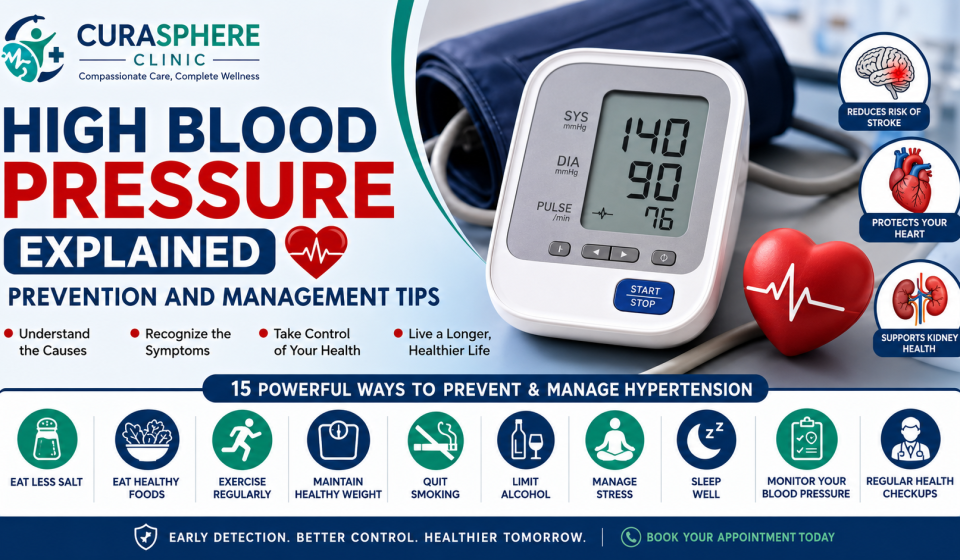
15 Effective Ways to Prevent and Manage High Blood Pressure
1. Reduce Salt Intake
Excess sodium causes the body to retain water, increasing blood pressure.
Aim for less than 2,300 mg of sodium per day.
2. Eat a Heart-Healthy Diet
Include:
- Fruits
- Vegetables
- Whole grains
- Lean proteins
- Healthy fats
A balanced diet supports healthy blood pressure levels.
3. Exercise Regularly
At least 150 minutes of moderate physical activity per week can significantly lower blood pressure.
Examples include:
- Walking
- Cycling
- Swimming
- Jogging
4. Maintain a Healthy Weight
Even modest weight loss can improve blood pressure control.
5. Quit Smoking
Stopping smoking immediately benefits heart and blood vessel health.
6. Limit Alcohol Consumption
Moderation helps reduce hypertension risk.
7. Manage Stress Effectively
Healthy stress-management techniques include:
- Meditation
- Yoga
- Deep breathing exercises
- Hobbies
8. Get Quality Sleep
Poor sleep contributes to high blood pressure.
Adults should aim for 7–9 hours of sleep nightly.
9. Monitor Blood Pressure at Home
Regular monitoring helps track trends and detect problems early.
10. Reduce Processed Foods
Processed foods are often high in sodium and unhealthy fats.
11. Increase Potassium Intake
Potassium helps balance sodium levels.
Good sources include:
- Bananas
- Sweet potatoes
- Spinach
- Avocados
12. Stay Hydrated
Adequate water intake supports healthy circulation.
13. Manage Diabetes
Controlling blood sugar levels reduces cardiovascular risk.
14. Follow Medical Advice
Take prescribed medications exactly as directed.
15. Schedule Regular Health Checkups
Routine screenings help detect and manage hypertension before complications arise.
Treatment Options for High Blood Pressure
When lifestyle changes are insufficient, healthcare providers may recommend medication.
Common medications include:
Diuretics
Help remove excess sodium and fluid.
ACE Inhibitors
Relax blood vessels and improve circulation.
Beta Blockers
Reduce heart workload.
Calcium Channel Blockers
Help blood vessels relax.
Treatment plans vary depending on individual health needs.
Foods That Help Lower Blood Pressure
Certain foods support heart health and blood pressure management.
These include:
- Leafy greens
- Berries
- Oats
- Fatty fish
- Nuts
- Seeds
- Garlic
- Beans
- Yogurt
A nutrient-rich diet can significantly improve cardiovascular health.
Foods to Avoid
To control blood pressure, limit:
- Fast food
- Processed snacks
- Sugary drinks
- Excess salt
- Processed meats
- Fried foods
Reducing these foods supports healthier blood pressure levels.
Complications of Untreated Hypertension
Ignoring high blood pressure can result in severe complications:
Heart Disease
Hypertension is a major contributor to heart attacks and heart failure.
Stroke
High pressure can damage blood vessels in the brain.
Kidney Damage
The kidneys rely on healthy blood vessels for proper function.
Vision Loss
Hypertension can damage blood vessels in the eyes.
Dementia
Long-term hypertension may contribute to cognitive decline.
When Should You See a Doctor?
Consult a healthcare professional if:
- Your blood pressure consistently exceeds 130/80 mmHg
- You experience chest pain
- You have severe headaches
- You experience shortness of breath
- You have sudden vision changes
Early intervention can prevent serious complications.
Sources:
- World Health Organization (WHO)
- Centers for Disease Control and Prevention (CDC)
- American Heart Association (AHA)
Conclusion
High blood pressure is a common but potentially dangerous condition that often develops without symptoms. Fortunately, it can be prevented and managed through healthy lifestyle choices, routine monitoring, and appropriate medical treatment.
By eating a balanced diet, staying active, maintaining a healthy weight, managing stress, and scheduling regular health checkups, you can significantly reduce your risk of hypertension and its complications.
Remember, controlling blood pressure today can protect your heart, brain, kidneys, and overall health for years to come.
FAQ
1. What is considered high blood pressure?
Blood pressure of 130/80 mmHg or higher is generally considered hypertension.
2. Why is hypertension called the silent killer?
Because it often develops without noticeable symptoms while causing damage to vital organs.
3. Can high blood pressure be cured?
While it may not always be cured, it can usually be effectively controlled through lifestyle changes and medication.
4. What foods lower blood pressure naturally?
Leafy greens, bananas, berries, oats, fish, nuts, and beans may help lower blood pressure.
5. Can stress cause high blood pressure?
Chronic stress can contribute to elevated blood pressure and unhealthy lifestyle habits.
6. How often should blood pressure be checked?
Adults should check blood pressure regularly, especially if they have risk factors.
7. Does exercise help lower blood pressure?
Yes, regular physical activity strengthens the heart and improves circulation.
8. Can young adults develop hypertension?
Yes, poor lifestyle habits, obesity, stress, and genetics can contribute to hypertension at any age.
9. Is high blood pressure hereditary?
Family history can increase the likelihood of developing hypertension.
10. What is the best way to prevent hypertension?
A healthy diet, regular exercise, maintaining a healthy weight, reducing stress, and avoiding smoking are among the most effective preventive measures.