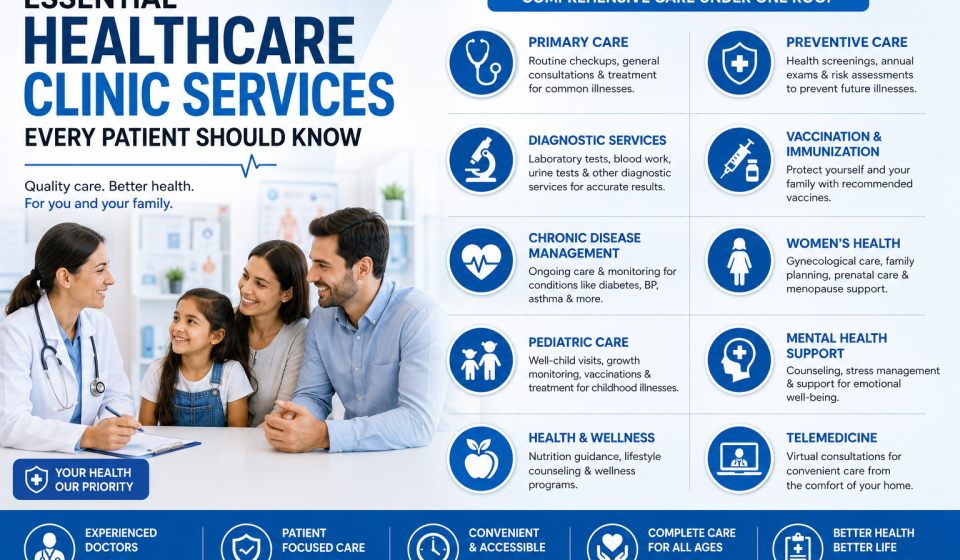

Knowing what services your healthcare clinic provides allows you to take a proactive approach to your well-being and ensures you receive the right care at the right time. In this guide, we’ll explore the essential healthcare clinic services every patient should know and explain how these services contribute to long-term health and wellness.
Healthcare clinics play a vital role in helping people maintain their health through preventive care, early diagnosis, and effective treatment. Whether you’re visiting a clinic for a routine checkup, managing a chronic illness, or seeking care for a sudden illness, understanding the services available can help you make informed healthcare decisions. Modern healthcare clinics offer much more than basic medical consultations. They provide a wide range of essential services, including preventive healthcare, diagnostic testing, vaccinations, chronic disease management, mental health support, and wellness counseling. These services are designed to improve overall health, detect medical conditions early, and reduce the risk of serious illnesses.
What Is a Healthcare Clinic?
A healthcare clinic is a medical facility that provides outpatient healthcare services for individuals and families. Unlike hospitals that focus on emergency care and complex procedures, healthcare clinics primarily offer preventive care, diagnosis, treatment, and ongoing management of common medical conditions.
Healthcare clinics are staffed by experienced professionals such as:
- Family physicians
- General practitioners
- Nurse practitioners
- Registered nurses
- Physician assistants
- Medical technicians
They serve as the first point of contact for many healthcare needs.
Primary Care Services
Primary care is one of the most important services offered by healthcare clinics.
Primary care providers help patients with:
- Routine medical examinations
- General health consultations
- Prescription management
- Follow-up appointments
- Treatment for common illnesses
- Referrals to specialists
Regular primary care visits help establish a long-term relationship with your healthcare provider and support better overall health.
Preventive Healthcare Services
Preventive healthcare aims to stop diseases before they develop.
Common preventive services include:
- Annual wellness exams
- Blood pressure checks
- Cholesterol testing
- Diabetes screening
- Cancer screenings
- Vaccinations
- Health risk assessments
Early detection often leads to more effective treatment and improved health outcomes.
Diagnostic and Laboratory Testing
Accurate diagnosis is essential for effective treatment.
Healthcare clinics commonly provide or arrange:
- Blood tests
- Urine tests
- Pregnancy testing
- COVID-19 testing
- Cholesterol testing
- Blood glucose testing
- Imaging referrals
Diagnostic testing helps healthcare providers identify health conditions quickly and accurately.
Vaccination and Immunization Services
Vaccinations protect individuals and communities from preventable diseases.
Healthcare clinics offer vaccines for:
- Influenza
- COVID-19
- Hepatitis
- Tetanus
- HPV
- Pneumonia
- Shingles
- Childhood immunizations
Keeping vaccinations current is one of the most effective ways to maintain long-term health.
Chronic Disease Management
Many patients require ongoing care for chronic medical conditions.
Healthcare clinics help manage:
- Diabetes
- Hypertension
- Asthma
- Heart disease
- Arthritis
- Thyroid disorders
Providers monitor progress, adjust medications, and offer lifestyle recommendations that improve disease control.
Women’s and Men’s Health Services
Healthcare clinics provide age-appropriate care for both men and women.
Women’s Health
Services often include:
- Routine gynecological exams
- Breast health screenings
- Family planning
- Pregnancy care
- Menopause support
Men’s Health
Common services include:
- Prostate health evaluations
- Heart health monitoring
- Hormone assessments
- Preventive screenings
Personalized healthcare helps address gender-specific health concerns.
Pediatric Healthcare Services
Healthcare clinics care for children from infancy through adolescence.
Pediatric services include:
- Well-child visits
- Vaccinations
- Growth monitoring
- Developmental assessments
- Treatment for common childhood illnesses
- School and sports physicals
Regular pediatric care supports healthy development and early identification of medical concerns.
Mental Health and Wellness Support
Modern healthcare recognizes the importance of mental health.
Many clinics provide:
- Anxiety screening
- Depression assessments
- Stress management counseling
- Behavioral health support
- Referrals to mental health specialists
Addressing emotional well-being improves overall quality of life.
Health Education and Lifestyle Counseling
Healthcare clinics help patients develop healthier lifestyles.
Topics commonly discussed include:
- Balanced nutrition
- Physical activity
- Weight management
- Smoking cessation
- Sleep hygiene
- Alcohol moderation
- Stress reduction
Healthy lifestyle habits significantly reduce the risk of chronic diseases.
Telemedicine and Digital Healthcare
Many healthcare clinics now offer virtual medical services.
Benefits include:
- Online consultations
- Prescription renewals
- Follow-up appointments
- Review of laboratory results
- Chronic disease monitoring
Telemedicine improves healthcare accessibility while saving time for patients.
When Should You Visit a Healthcare Clinic?
Schedule a clinic visit if you experience:
- Persistent fever
- Ongoing cough
- Minor injuries
- Skin conditions
- Digestive problems
- High blood pressure
- Diabetes symptoms
- Unexplained fatigue
Routine annual wellness visits are also recommended even if you feel healthy.
Choosing the Right Healthcare Clinic
When selecting a clinic, consider:
Qualified Healthcare Providers
Choose licensed and experienced medical professionals.
Comprehensive Services
Look for clinics that provide preventive care, diagnostics, chronic disease management, and wellness services.
Convenient Location
A nearby clinic encourages regular healthcare visits.
Insurance Acceptance
Verify your insurance coverage before scheduling appointments.
Positive Patient Reviews
Reviews often provide insight into quality of care and patient satisfaction.
Modern Facilities
Clean, well-equipped clinics contribute to better patient experiences.
source
https://l1nq.com/9zqoj5t
https://sl1nk.com/7vk3k6t
https://sl1nk.com/l8dsp7p
Conclusion
Healthcare clinics provide far more than treatment for illnesses—they serve as the foundation of lifelong health through preventive care, early diagnosis, routine screenings, chronic disease management, vaccinations, and wellness education. Understanding the essential services available at your local healthcare clinic empowers you to make informed decisions about your health and seek medical care before minor concerns become serious conditions.
Whether you’re scheduling an annual wellness exam, managing a chronic disease, seeking pediatric care, or receiving mental health support, healthcare clinics offer comprehensive, patient-centered services designed to meet the needs of individuals and families alike.
By choosing a trusted healthcare clinic and making regular visits part of your routine, you invest in better health, earlier disease detection, and a higher quality of life for years to come.
FAQs
1. What services do healthcare clinics provide?
Healthcare clinics offer primary care, preventive healthcare, vaccinations, laboratory testing, chronic disease management, mental health support, pediatric care, and wellness counseling.
2. Why are preventive healthcare services important?
Preventive healthcare helps detect diseases early, reduces health risks, lowers healthcare costs, and improves long-term wellness.
3. Can healthcare clinics manage chronic diseases?
Yes. Clinics commonly provide ongoing care for diabetes, hypertension, asthma, heart disease, arthritis, and other chronic medical conditions.
4. Do healthcare clinics provide vaccinations?
Yes. Most clinics offer routine immunizations for children and adults, including flu, COVID-19, tetanus, hepatitis, HPV, shingles, and pneumonia vaccines.
5. What should I bring to my first clinic visit?
Bring your identification, insurance information, medication list, medical history, allergy information, and any questions or symptoms you want to discuss.