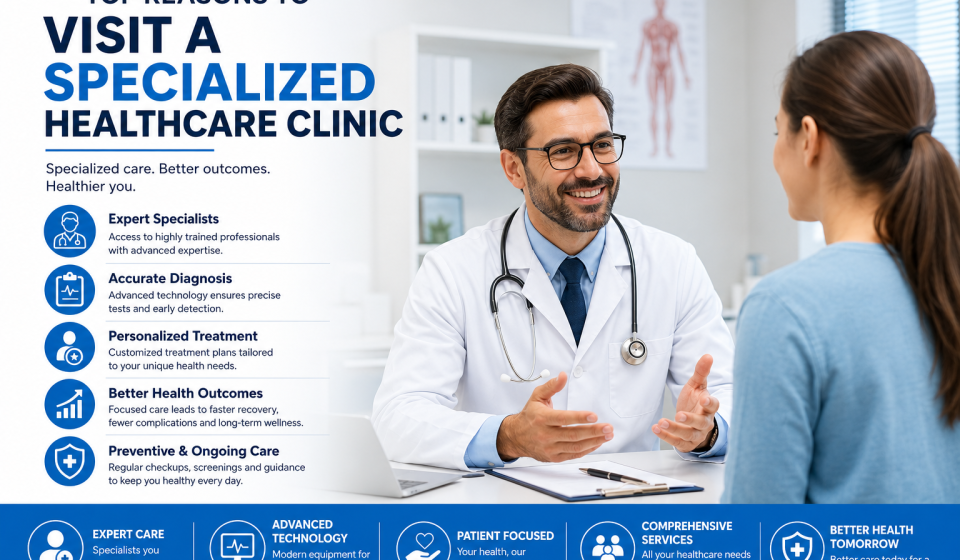

Discover the top reasons to visit a specialized healthcare clinic for expert diagnosis, personalized treatment, preventive care, and better health outcomes.
When it comes to maintaining your health, choosing the right healthcare provider is just as important as seeking treatment. While general medical clinics offer a wide range of primary care services, there are times when specialized healthcare clinics provide more focused expertise and advanced treatment options. These clinics are dedicated to diagnosing, treating, and managing specific health conditions with the help of trained specialists and modern medical technology. Whether you’re dealing with a chronic illness, recovering from an injury, managing a specific medical condition, or seeking preventive care in a particular area of medicine, specialized healthcare clinics can deliver personalized care tailored to your unique needs. They often provide faster diagnoses, targeted treatment plans, and access to specialized equipment that may not be available in a general practice.
What Is a Specialized Healthcare Clinic?
A specialized healthcare clinic is a medical facility that focuses on diagnosing, treating, and preventing conditions related to a specific area of medicine. Unlike general clinics, these facilities employ healthcare professionals with advanced training and expertise in particular medical specialties.
Examples of specialized healthcare clinics include:
- Cardiology clinics
- Dermatology clinics
- Orthopedic clinics
- Women’s health clinics
- Pediatric clinics
- Urology clinics
- Mental health clinics
- Physical therapy clinics
- Diabetes care clinics
- Eye care clinics
These clinics are designed to provide expert care for patients with specialized healthcare needs.
Access to Medical Specialists
One of the biggest advantages of visiting a specialized healthcare clinic is access to experienced medical professionals.
Specialists possess in-depth knowledge of specific conditions and remain updated on the latest medical research, treatment methods, and technologies.
Benefits include:
- Accurate diagnosis
- Advanced treatment options
- Personalized medical advice
- Improved patient outcomes
Their expertise often leads to faster and more effective care.
Accurate Diagnosis Using Advanced Technology
Specialized clinics often invest in modern diagnostic equipment designed for specific medical conditions.
Depending on the specialty, patients may benefit from:
- Digital imaging
- Ultrasound examinations
- Laboratory testing
- Advanced screening procedures
- Diagnostic monitoring devices
Early and accurate diagnosis allows healthcare providers to begin treatment sooner and improve recovery outcomes.
Personalized Treatment Plans
Every patient has unique medical needs.
Specialized healthcare clinics develop customized treatment plans based on:
- Medical history
- Current symptoms
- Lifestyle
- Family history
- Diagnostic results
- Personal health goals
Individualized care increases treatment effectiveness while improving patient satisfaction.
Better Management of Chronic Diseases
Many chronic conditions require ongoing monitoring and specialized care.
Healthcare clinics help manage conditions such as:
- Diabetes
- Heart disease
- Asthma
- Arthritis
- Kidney disease
- Thyroid disorders
Regular follow-up appointments help prevent complications while improving long-term health.
Preventive Healthcare Services
Specialized clinics don’t only treat diseases—they also focus on prevention.
Preventive services often include:
- Routine screenings
- Vaccinations
- Health risk assessments
- Lifestyle counseling
- Nutrition guidance
- Wellness education
Preventive care reduces the likelihood of developing serious health conditions.
Comprehensive Patient Education
Understanding your medical condition is an important part of successful treatment.
Specialized clinics educate patients about:
- Disease management
- Medication usage
- Healthy lifestyle habits
- Treatment expectations
- Recovery plans
- Preventive measures
Well-informed patients often make better healthcare decisions.
Coordinated Care with Other Healthcare Providers
Many specialized clinics collaborate closely with:
- Primary care physicians
- Hospitals
- Surgeons
- Physical therapists
- Pharmacists
- Mental health professionals
This coordinated approach ensures patients receive comprehensive healthcare across multiple specialties.
Improved Patient Experience
Specialized clinics are designed around specific patient needs.
Many offer:
- Shorter waiting times
- Comfortable treatment environments
- Dedicated medical staff
- Efficient appointment scheduling
- Telemedicine consultations
- Ongoing patient support
A better healthcare experience often encourages patients to remain engaged in their treatment.
When Should You Visit a Specialized Healthcare Clinic?
You should consider visiting a specialized clinic if you:
- Have persistent symptoms
- Need expert medical advice
- Have a chronic medical condition
- Require advanced diagnostic testing
- Need specialized treatment
- Were referred by your primary care physician
- Require long-term disease management
Early specialist care often prevents health conditions from worsening.
How to Choose the Right Specialized Healthcare Clinic
When selecting a clinic, consider the following:
Qualified Specialists
Ensure healthcare providers are licensed and experienced in their specialty.
Modern Medical Equipment
Updated technology supports accurate diagnosis and effective treatment.
Positive Patient Reviews
Read patient testimonials to evaluate service quality.
Insurance Acceptance
Verify your insurance coverage before scheduling appointments.
Convenient Location
Choose a clinic that is easily accessible for follow-up visits.
Comprehensive Services
Look for clinics that provide diagnosis, treatment, rehabilitation, and follow-up care.
Benefits of Specialized Healthcare Clinics
Patients often experience numerous long-term advantages.
These include:
- Faster diagnosis
- More accurate treatment
- Better disease management
- Improved recovery rates
- Reduced complications
- Personalized healthcare
- Higher patient satisfaction
- Better overall quality of life
Specialized care provides focused attention that supports better health outcomes.
source
https://l1nq.com/4bs1y3f
https://sl1nk.com/nttyyul
https://sl1nk.com/iy4u14f
Conclusion
Specialized healthcare clinics play a vital role in today’s healthcare system by providing expert care for specific medical conditions. Their experienced specialists, advanced diagnostic technology, personalized treatment plans, and preventive healthcare services allow patients to receive focused care that addresses their unique health needs.
Whether you’re managing a chronic illness, seeking an accurate diagnosis, recovering from an injury, or looking for preventive care, visiting a specialized healthcare clinic can significantly improve your treatment experience and long-term wellness. These clinics combine medical expertise with patient-centered care, helping individuals achieve better health outcomes and a higher quality of life.
By choosing the right specialized healthcare clinic, you gain access to expert knowledge, modern treatment options, and ongoing support that can make a meaningful difference in your overall health journey.
FAQs
1. What is a specialized healthcare clinic?
A specialized healthcare clinic focuses on diagnosing, treating, and managing specific medical conditions using healthcare professionals with advanced expertise in particular areas of medicine.
2. When should I visit a specialized healthcare clinic?
You should visit a specialized clinic if you have persistent symptoms, a chronic condition, require specialized treatment, or receive a referral from your primary care physician.
3. What are the benefits of specialized healthcare clinics?
Benefits include expert medical care, advanced diagnostic technology, personalized treatment plans, better disease management, preventive healthcare, and improved patient outcomes.
4. Do I need a referral to visit a specialized healthcare clinic?
It depends on your healthcare system and insurance provider. Some clinics accept direct appointments, while others may require a referral from a primary care physician.
5. Are specialized healthcare clinics more expensive than general clinics?
Costs vary depending on the specialty, services provided, and insurance coverage. However, early specialized care may reduce long-term medical expenses by preventing complications.