
This article explores how healthcare clinics improve access to quality care, why they are becoming increasingly popular, and the role they play in shaping the future of healthcare.
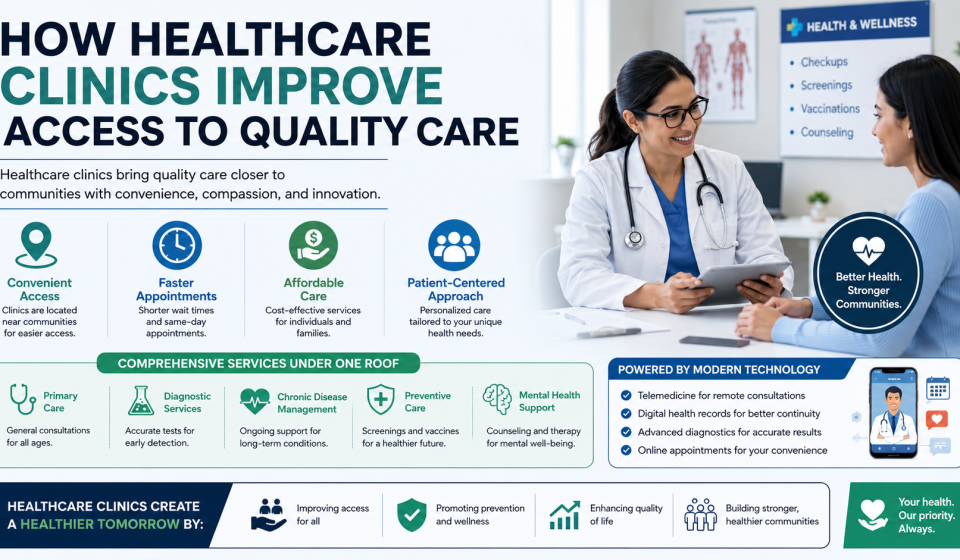
Healthcare is one of the most important aspects of a healthy society. However, access to quality medical services remains a challenge for many people due to long waiting times, high treatment costs, limited specialist availability, and geographical barriers. Healthcare clinics have emerged as an effective solution to these challenges by providing convenient, affordable, and patient-centered care. Modern healthcare clinics bridge the gap between patients and medical professionals by offering preventive care, diagnosis, treatment, chronic disease management, and wellness services in a single location. Equipped with advanced technology, skilled healthcare professionals, and digital health systems, clinics make quality healthcare more accessible than ever before.
What Are Healthcare Clinics?
Healthcare clinics are medical facilities that provide outpatient healthcare services without requiring patients to stay overnight. They offer a wide range of services including general consultations, preventive screenings, vaccinations, diagnostic testing, chronic disease management, specialist referrals, and health education.
Unlike hospitals that mainly focus on emergency and complex medical cases, clinics emphasize early diagnosis, preventive care, and routine medical treatment. Their goal is to help patients receive timely care before health problems become serious.
Making Healthcare More Accessible
One of the greatest advantages of healthcare clinics is improved accessibility. Many communities, particularly suburban and rural areas, have limited access to hospitals. Clinics provide medical services closer to where people live and work, reducing travel time and making healthcare more convenient.
Extended working hours, weekend appointments, and online booking systems also allow patients to receive medical attention without disrupting their daily schedules.
Affordable Medical Services
Healthcare affordability is a major concern worldwide. Clinics often provide quality care at lower costs than hospitals because they focus primarily on outpatient services.
Routine health checkups, vaccinations, consultations, and follow-up visits are generally more affordable in clinics. Early diagnosis also prevents expensive treatments later by identifying medical conditions before they become severe.
Affordable healthcare encourages more people to seek medical attention when needed instead of delaying treatment.
Faster Appointment Scheduling
Hospital waiting times can sometimes delay diagnosis and treatment. Healthcare clinics generally offer quicker appointment scheduling and shorter waiting periods.
Patients with common illnesses, minor injuries, or routine healthcare needs can often receive same-day or next-day appointments, leading to faster diagnosis and earlier treatment.
This timely care improves health outcomes while reducing unnecessary hospital visits.
Focus on Preventive Healthcare
Preventive healthcare is one of the strongest contributions of modern clinics. Rather than treating illness only after symptoms become serious, clinics encourage patients to maintain their health through preventive services.
These include:
- Annual health checkups
- Vaccinations
- Blood pressure monitoring
- Diabetes screening
- Cancer screenings
- Cholesterol testing
- Lifestyle counseling
Preventive care helps reduce the risk of chronic diseases while promoting healthier communities.
Better Management of Chronic Diseases
Millions of people live with long-term conditions such as diabetes, hypertension, asthma, arthritis, and heart disease. Healthcare clinics play an important role in managing these chronic illnesses through continuous monitoring and personalized treatment plans.
Patients receive regular follow-up appointments, medication reviews, lifestyle guidance, and education that help them manage their conditions more effectively.
Consistent monitoring reduces complications and improves long-term health outcomes.
Personalized Patient Care
Modern healthcare clinics emphasize patient-centered care. Instead of treating every patient the same way, clinics create individualized treatment plans based on medical history, lifestyle, age, and health goals.
Healthcare professionals spend time understanding each patient’s concerns, allowing them to recommend personalized treatment options that improve satisfaction and recovery.
This individualized approach builds stronger relationships between patients and healthcare providers.
Improved Access Through Telemedicine
Technology has transformed healthcare delivery. Many clinics now offer telemedicine services that allow patients to consult healthcare providers remotely using smartphones, tablets, or computers.
Telemedicine benefits include:
- Remote consultations
- Follow-up appointments
- Prescription renewals
- Chronic disease monitoring
- Mental health counseling
Patients living in remote locations or those with mobility challenges can receive quality care without traveling long distances.
Advanced Diagnostic Services
Modern healthcare clinics increasingly offer diagnostic facilities that allow patients to receive faster evaluations.
Common services include:
- Laboratory testing
- Blood analysis
- X-rays
- Ultrasound imaging
- ECG testing
- Health screenings
Having these services available within the clinic speeds up diagnosis and treatment decisions.
Multi-Specialty Healthcare Under One Roof
Many healthcare clinics now provide access to multiple specialists in one location. Instead of visiting different facilities, patients can consult physicians from various specialties, including:
- Family medicine
- Pediatrics
- Women’s health
- Orthopedics
- Dermatology
- Cardiology
- Physiotherapy
- Nutrition counseling
Integrated care improves coordination between healthcare providers and creates a smoother patient experience.
Digital Health Records Improve Continuity of Care
Electronic Health Records (EHRs) have greatly improved healthcare efficiency. Clinics use secure digital systems to maintain patient medical histories, prescriptions, laboratory results, allergies, and treatment plans.
Digital records reduce paperwork, improve communication among healthcare providers, minimize medical errors, and enable faster clinical decisions.
Patients also benefit from more accurate and coordinated care.
Supporting Mental Health Services
Mental health has become an essential component of modern healthcare. Many clinics now provide mental health assessments, counseling services, stress management programs, anxiety treatment, and depression support.
Integrating mental healthcare into primary care encourages early intervention while reducing stigma around seeking psychological support.
Community Health Education
Healthcare clinics do more than provide treatment. They actively educate communities about healthy living through wellness programs, nutrition counseling, exercise guidance, smoking cessation support, vaccination awareness, and disease prevention campaigns.
Educated patients are more likely to adopt healthier lifestyles and prevent avoidable illnesses.
Improving Healthcare in Rural Communities
Healthcare clinics have significantly improved access to medical care in underserved rural and remote regions.
Instead of traveling several hours to reach large hospitals, residents can receive primary healthcare closer to home. Mobile clinics, telehealth services, and community-based medical centers further improve healthcare accessibility in these areas.
Reducing Hospital Overcrowding
Hospitals often become overwhelmed by patients seeking treatment for minor illnesses and routine medical issues.
Healthcare clinics help reduce this burden by managing non-emergency cases efficiently. This allows hospitals to focus resources on emergency medicine, surgeries, and complex conditions while clinics provide accessible routine healthcare.
The result is a more efficient healthcare system for everyone.
The Future of Healthcare Clinics
Healthcare clinics continue evolving through innovations such as:
- Artificial Intelligence-assisted diagnosis
- Remote patient monitoring
- Wearable health technology
- Digital appointment systems
- Personalized medicine
- Predictive healthcare analytics
- Expanded telemedicine services
These technologies will continue making healthcare more efficient, accessible, and patient-centered in the years ahead.
source
https://sl1nk.com/44zpxrv
https://sl1nk.com/dke27rl
https://sl1nk.com/d9tf53p
Conclusion
Healthcare clinics have become essential providers of accessible, affordable, and high-quality medical care. By emphasizing preventive healthcare, faster appointments, personalized treatment, chronic disease management, telemedicine, and community wellness, they help patients receive timely care before health issues become more serious.
As technology continues transforming medicine, healthcare clinics will play an even greater role in improving patient outcomes and expanding access to quality healthcare. Their patient-centered approach, combined with modern digital tools and integrated services, makes them one of the most important components of today’s healthcare system.
For individuals, families, and communities alike, healthcare clinics represent a practical, efficient, and future-ready solution for maintaining long-term health and well-being.
FAQs
1. What services do healthcare clinics provide?
Healthcare clinics provide consultations, preventive care, vaccinations, diagnostic testing, chronic disease management, minor treatments, health screenings, and specialist referrals.
2. How do healthcare clinics improve access to quality care?
They provide affordable services, shorter waiting times, convenient locations, telemedicine options, and preventive healthcare programs.
3. Are healthcare clinics more affordable than hospitals?
For routine outpatient services, healthcare clinics are often more cost-effective than hospitals while still delivering high-quality care.
4. Can healthcare clinics treat chronic diseases?
Yes. Clinics regularly manage conditions such as diabetes, hypertension, asthma, arthritis, and heart disease through ongoing monitoring and personalized treatment.
5. What is telemedicine in healthcare clinics?
Telemedicine allows patients to consult healthcare professionals remotely through secure video or phone appointments.