
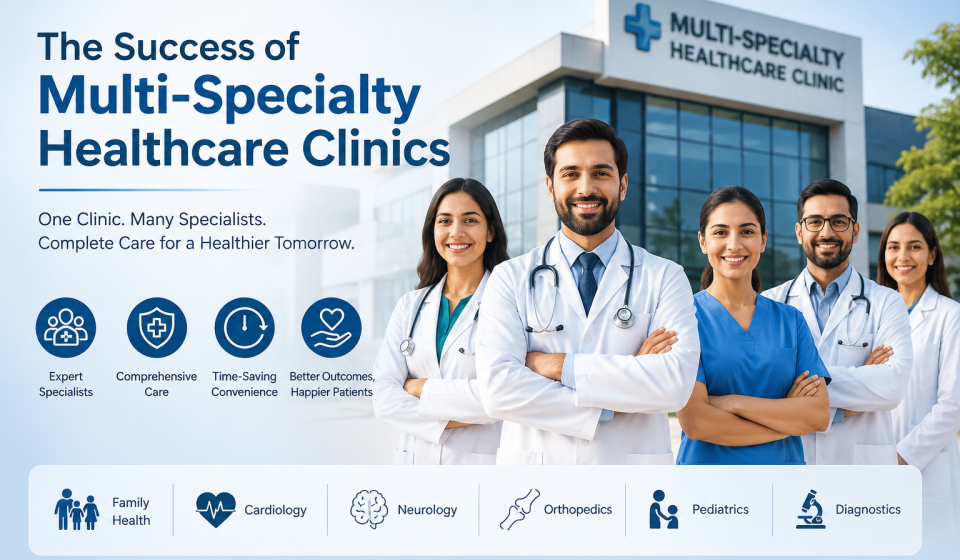

Healthcare is becoming more advanced, patient-focused, and convenient than ever before. Patients today do not want to visit different places for every medical need. They want complete care, faster service, expert doctors, and affordable treatment in one trusted location. This is one of the biggest reasons why multi-specialty healthcare clinics are becoming highly successful. Multi-specialty healthcare clinics bring different medical services under one roof. These clinics may include general physicians, pediatricians, dermatologists, gynecologists, dentists, physiotherapists, diagnostic labs, pharmacy support, preventive care, and chronic disease management. Instead of moving from one hospital or clinic to another, patients can receive complete healthcare support in a single place.
What Are Multi-Specialty Healthcare Clinics?
Multi-specialty healthcare clinics are medical centers that provide care across different health departments. They are designed to treat a wide range of health concerns, from common illnesses to specialized medical needs.
For example, a patient may visit the clinic for a general checkup, get blood tests done, consult a specialist, collect medicines, and schedule a follow-up appointment—all in the same place. This saves time and makes healthcare easier for patients and families.
These clinics are especially useful for people who need regular care, such as children, elderly patients, pregnant women, people with chronic diseases, and working professionals.
Why Multi-Specialty Clinics Are Becoming Successful
The success of multi-specialty clinics comes from their ability to meet modern patient expectations. People want healthcare that is quick, simple, affordable, and trustworthy. Multi-specialty clinics provide all these benefits through organized services and patient-centered care.
Patients no longer want a confusing healthcare journey. They prefer clinics where they can access multiple doctors, diagnostic services, and follow-up care without unnecessary delays. This complete-care approach makes multi-specialty clinics a preferred choice.
One-Stop Healthcare Solution
One of the biggest reasons behind the success of multi-specialty clinics is the one-stop healthcare model. Patients can receive different types of care in one location.
This is especially helpful for families. A child may need a pediatric consultation, a parent may need a diabetes checkup, and an elderly family member may need blood pressure monitoring. A multi-specialty clinic can support all these needs together.
This saves travel time, reduces confusion, and makes healthcare more organized.
Better Coordination Between Doctors
In traditional healthcare, patients often visit different doctors at different locations. This can create communication gaps. One doctor may not know what another doctor has prescribed or diagnosed.
Multi-specialty clinics improve this problem by allowing doctors from different departments to coordinate with each other. When specialists work together, they can understand the patient’s complete health condition more clearly.
For example, a diabetic patient may need support from a general physician, dietitian, eye specialist, and cardiologist. In a multi-specialty clinic, these experts can work together to provide better care.
Faster Diagnosis and Treatment
Multi-specialty clinics often include diagnostic services such as blood tests, urine tests, imaging, health screenings, and basic lab support. This helps doctors diagnose health problems faster.
When consultation and testing are available in the same place, patients do not need to wait for many days or visit separate labs. Faster diagnosis means faster treatment, which can improve health outcomes.
Early detection is especially important for conditions such as diabetes, high blood pressure, thyroid problems, infections, heart risks, and lifestyle-related diseases.
Improved Patient Convenience
Convenience is a major factor in healthcare decisions. Patients prefer clinics that are easy to access, simple to book, and comfortable to visit.
Multi-specialty clinics often provide online appointment booking, digital records, flexible timings, teleconsultation, and follow-up reminders. These features make healthcare easier for busy patients.
Working professionals, parents, students, and elderly patients all benefit from convenient healthcare services. The easier the process, the more likely patients are to seek timely care.
Cost-Effective Healthcare
Multi-specialty clinics can also make healthcare more affordable. Since patients can access multiple services in one place, they may save money on travel, repeated consultations, and unnecessary hospital visits.
Many clinics also offer preventive health packages, family checkup plans, chronic disease care programs, and affordable diagnostic services. These options help patients manage their health before problems become serious.
Early treatment and preventive care can reduce the chances of expensive emergency treatment later.
Focus on Preventive Care
Modern healthcare is not only about treating disease. It is also about preventing illness. Multi-specialty clinics are successful because they support preventive healthcare through regular checkups, screenings, vaccinations, lifestyle counseling, and health education.
Preventive care helps detect diseases early and encourages healthier habits. Patients can understand their risk factors and take action before conditions become severe.
This is especially important for lifestyle-related diseases such as obesity, diabetes, hypertension, and heart disease.
Better Care for Chronic Diseases
Chronic diseases need regular monitoring and long-term support. Patients with diabetes, asthma, arthritis, heart disease, thyroid problems, or high blood pressure need continuous follow-up.
Multi-specialty clinics are ideal for chronic disease management because they provide ongoing care from different healthcare professionals. Doctors can monitor progress, adjust medicines, recommend lifestyle changes, and provide regular support.
This improves patient discipline and helps reduce complications.
Family-Centered Healthcare
Another reason for the success of multi-specialty clinics is family-centered care. These clinics can serve children, adults, women, and elderly patients in one location.
Families prefer a trusted clinic where all members can receive care. This builds long-term relationships between doctors and patients. When doctors understand a family’s health history, they can offer better guidance and personalized treatment.
Family-centered care also encourages regular checkups and healthier lifestyles.
Use of Digital Technology
Technology has helped multi-specialty clinics become more efficient. Digital health records, online booking, telemedicine, e-prescriptions, lab report sharing, and automated reminders improve the patient experience.
Digital records help doctors track medical history accurately. Telemedicine allows patients to consult doctors from home for follow-ups or minor health concerns. Online reports reduce waiting time and improve communication.
These digital tools make clinics more modern, reliable, and patient-friendly.
Comfortable Patient Experience
Large hospitals can sometimes feel crowded and stressful. Multi-specialty clinics often provide a calmer and more comfortable environment.
Patients appreciate friendly staff, clean spaces, shorter waiting times, clear communication, and easy appointment systems. A positive experience encourages patients to return for regular care.
Good patient experience is one of the strongest reasons behind the growth of multi-specialty clinics.
Trust and Long-Term Patient Relationships
Trust is essential in healthcare. Multi-specialty clinics build trust by offering consistent care, expert doctors, transparent communication, and reliable follow-ups.
When patients receive good care from one clinic, they are more likely to return and recommend it to others. This creates strong community trust and helps clinics grow successfully.
Long-term relationships also improve treatment because doctors become familiar with the patient’s health history and needs.
Role in Reducing Hospital Burden
Multi-specialty clinics also help reduce pressure on hospitals. Many routine health concerns do not require hospital-level treatment. Clinics can manage general consultations, preventive care, chronic disease monitoring, minor illnesses, and follow-ups.
This allows hospitals to focus on emergencies, surgeries, and critical care. As a result, the entire healthcare system becomes more efficient.
Why Patients Prefer Multi-Specialty Clinics
Patients prefer multi-specialty healthcare clinics because they offer convenience, complete care, expert support, affordability, and comfort. They reduce the need for multiple appointments at different locations and provide a smoother healthcare journey.
For modern patients, time and trust matter. Multi-specialty clinics meet both needs by offering quality care in a simple and organized way.
Future of Multi-Specialty Healthcare Clinics
The future of multi-specialty clinics looks strong. As patients become more aware of preventive care, digital healthcare, and personalized treatment, demand for these clinics will continue to grow.
Clinics that combine expert doctors, advanced technology, affordable packages, and patient-friendly services will become even more successful. They will play an important role in making healthcare more accessible and efficient.
source
https://sl1nk.com/1fwug0r
https://sl1nk.com/hwaxcfu
https://sl1nk.com/gj5993m
https://l1nq.com/y0aqg3f
Conclusion
The success of multi-specialty healthcare clinics comes from their ability to provide complete, convenient, and coordinated care. Patients can access different medical services under one roof, saving time, reducing stress, and improving treatment outcomes.
These clinics support preventive care, chronic disease management, family healthcare, faster diagnosis, and better doctor communication. With modern technology and patient-centered services, multi-specialty clinics are becoming one of the most trusted healthcare choices.
As healthcare continues to evolve, multi-specialty clinics will remain important because they offer what patients need most: quality care, convenience, affordability, and trust.
FAQs
1.What is a multi-specialty healthcare clinic?
A multi-specialty healthcare clinic is a medical center that provides different healthcare services and specialist consultations under one roof.
2.Why are multi-specialty clinics successful?
They are successful because they offer convenience, faster diagnosis, coordinated care, affordable services, and better patient experience.
3.What services are available in multi-specialty clinics?
Services may include general consultation, specialist care, diagnostics, pharmacy support, vaccinations, preventive checkups, and chronic disease management.
4.Are multi-specialty clinics good for families?
Yes, they are suitable for families because children, adults, women, and elderly patients can receive care in one location.
5.How do multi-specialty clinics help patients save time?
Patients can consult doctors, complete tests, collect medicines, and schedule follow-ups in the same place, reducing travel and waiting time.