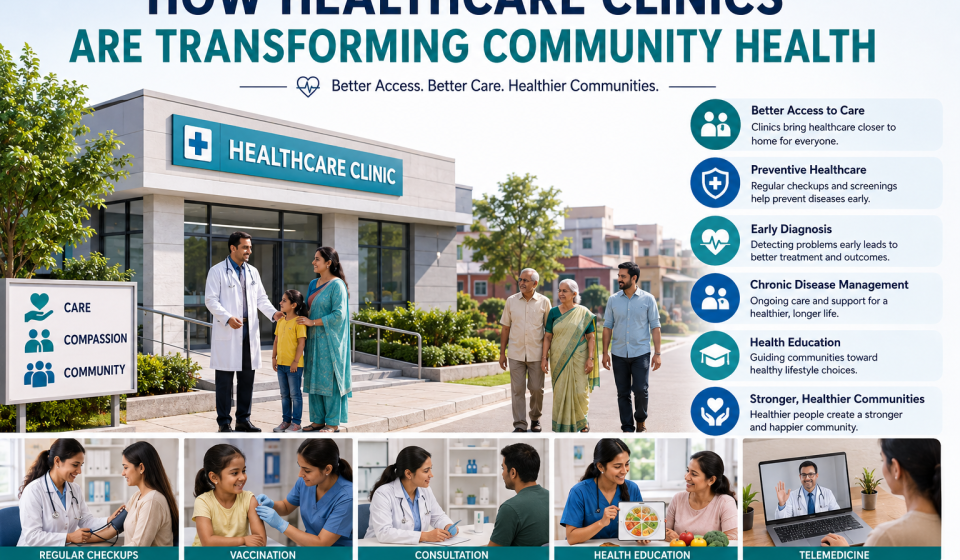

Learn how healthcare clinics are transforming community health through preventive care, early diagnosis, affordable medical services, chronic disease management, and improved access to quality healthcare for healthier communities.
Healthcare clinics are playing a powerful role in improving community health. In the past, many people visited hospitals only when they became seriously ill. Today, healthcare clinics are helping communities focus more on prevention, early diagnosis, regular checkups, and long-term wellness. They make medical care easier to access, more affordable, and more connected to everyday life. A healthcare clinic is often the first place people visit for common illnesses, health screenings, vaccinations, chronic disease care, and wellness advice. Because clinics are usually located closer to neighborhoods, they help people receive care before small health problems become serious. This makes clinics an important part of building healthier communities.
What Is Community Health?
Community health means the overall health and well-being of people living in a particular area. It includes physical health, mental wellness, disease prevention, health education, access to medical care, and healthy lifestyle habits.
A strong community health system helps people stay informed, receive timely treatment, and prevent common diseases. Healthcare clinics support this goal by offering local, patient-friendly services that meet the needs of families, workers, children, elderly people, and patients with long-term conditions.
Improving Access to Medical Care
One of the biggest ways healthcare clinics transform community health is by improving access. Hospitals may be far away, crowded, or expensive for many people. Clinics are often easier to reach and simpler to use for everyday healthcare needs.
When clinics are available in local areas, people are more likely to visit a doctor for symptoms, checkups, and health advice. This reduces delays in treatment and helps communities become healthier over time.
Promoting Preventive Healthcare
Preventive healthcare is one of the strongest benefits of clinics. Instead of waiting for illness to become serious, clinics encourage people to take action early. Preventive services may include blood pressure checks, diabetes screening, cholesterol tests, cancer screenings, vaccinations, and lifestyle counseling.
When more people receive preventive care, the entire community benefits. Early detection reduces complications, lowers healthcare costs, and improves quality of life.
Early Diagnosis and Timely Treatment
Many diseases can be treated more effectively when diagnosed early. Healthcare clinics help detect conditions such as diabetes, hypertension, infections, thyroid problems, asthma, and heart risks before they become severe.
With quick consultations and basic diagnostic services, clinics allow patients to begin treatment sooner. Early treatment can prevent hospital admissions and reduce the burden on families and healthcare systems.
Supporting Chronic Disease Management
Chronic diseases are a major challenge in many communities. Conditions like diabetes, high blood pressure, asthma, arthritis, and heart disease require regular follow-up and monitoring. Clinics make chronic care easier by providing ongoing support close to home.
Patients can visit clinics for medication reviews, health tracking, lifestyle guidance, and routine tests. This regular care helps prevent complications and keeps patients more stable.
Making Healthcare More Affordable
Healthcare costs can stop people from seeking medical help. Clinics often provide more affordable care for routine health needs compared to large hospital visits. This makes healthcare more reachable for low-income families, elderly patients, and people without easy access to specialty hospitals.
Affordable clinics encourage people to seek care early instead of delaying treatment. This improves community health and reduces the chance of advanced illness.
Health Education for Better Lifestyle Choices
Clinics do more than treat disease. They also educate people about healthy living. Doctors, nurses, and healthcare workers can guide patients on nutrition, exercise, sleep, stress management, hygiene, medication use, and disease prevention.
Health education creates awareness. When people understand how lifestyle affects their health, they can make better choices for themselves and their families.
Vaccination and Disease Prevention
Vaccination programs are essential for community health. Clinics help protect children, adults, and elderly people from preventable diseases by offering immunization services.
When vaccination rates improve, communities become safer. Clinics also educate families about vaccine schedules, seasonal flu shots, and disease prevention practices.
Supporting Maternal and Child Health
Healthcare clinics are important for mothers and children. Many clinics provide prenatal checkups, child growth monitoring, vaccinations, nutrition guidance, and basic pediatric care.
Healthy mothers and children create healthier communities. Regular clinic visits during pregnancy and childhood can reduce health risks and support better development.
Reducing Pressure on Hospitals
Clinics help reduce unnecessary hospital visits by treating common illnesses and routine health concerns. This allows hospitals to focus on emergencies, surgeries, and complex medical cases.
When clinics manage everyday healthcare, the entire healthcare system becomes more efficient. Patients receive care at the right place and hospitals can better serve critical cases.
Building Trust Within Communities
Local clinics often build strong relationships with patients. When people know their healthcare providers, they feel more comfortable asking questions and following treatment advice.
Trust is important for better health outcomes. Patients who trust their clinic are more likely to attend follow-ups, take medicines correctly, and participate in preventive screenings.
Using Technology to Improve Community Care
Modern healthcare clinics are using technology to improve services. Digital records, appointment systems, teleconsultations, online reports, reminder messages, and electronic prescriptions make care more organized.
Technology helps clinics track patient history, send follow-up reminders, and support people who cannot visit in person. This makes healthcare more convenient and efficient for the community.
Mental Health and Wellness Support
Community health also includes mental well-being. Many clinics now recognize the importance of stress management, anxiety support, counseling referrals, and lifestyle guidance.
By making mental health conversations more accessible, clinics help reduce stigma and encourage people to seek support early.
Emergency Awareness and Referral Support
Healthcare clinics may not handle major emergencies, but they play an important role in identifying urgent cases and referring patients to hospitals quickly. For example, if a patient shows signs of stroke, heart attack, severe infection, or serious injury, clinic staff can guide them toward emergency care.
This timely referral can save lives and improve treatment outcomes.
Creating Healthier Communities for the Future
Healthcare clinics are transforming community health by making care more local, preventive, affordable, and patient-centered. As communities grow, clinics will continue to support public health through screenings, education, chronic care, vaccinations, and wellness programs.
The future of community health depends on strong local healthcare systems. Clinics are at the center of this change because they connect people with care when and where they need it most.
source
https://l1nq.com/g4xz63x
https://sl1nk.com/bfnjb48
https://sl1nk.com/sh10w6c
https://sl1nk.com/fw6fcuz
Conclusion
Healthcare clinics are transforming community health by improving access to care, promoting prevention, supporting chronic disease management, offering health education, and reducing pressure on hospitals. They make healthcare easier, faster, and more affordable for people of all ages.
By focusing on early diagnosis, regular checkups, vaccination, lifestyle guidance, and patient-centered care, clinics help communities become healthier and more informed. For families, workers, elderly patients, and people with long-term conditions, healthcare clinics are an essential part of better community wellness.
FAQs
1. How do healthcare clinics improve community health?
Healthcare clinics improve community health by offering preventive care, regular checkups, early diagnosis, vaccinations, chronic disease support, and health education close to where people live.
2. Why are clinics important for preventive healthcare?
Clinics help detect health risks early through screenings, checkups, and lifestyle counseling. This prevents serious illness and improves long-term health.
3. Can healthcare clinics reduce hospital pressure?
Yes. Clinics treat routine illnesses and minor health concerns, which reduces unnecessary hospital visits and allows hospitals to focus on emergencies and complex cases.
4. Are healthcare clinics useful for chronic disease care?
Yes. Clinics provide regular monitoring, medication reviews, lifestyle advice, and follow-up care for conditions like diabetes, hypertension, asthma, and heart disease.
5. Do healthcare clinics support family health?
Yes. Many clinics offer care for children, adults, elderly patients, mothers, and people with long-term health needs, making them useful for the whole family.