
Discover the top benefits of visiting a healthcare clinic for regular checkups, including early disease detection, preventive care, better health management, and long-term wellness.
Good health is one of the most valuable parts of life, yet many people visit a doctor only when they feel sick. This habit can be risky because many health problems develop silently without obvious symptoms in the beginning. Regular checkups at a healthcare clinic help detect health issues early, prevent serious diseases, and keep your body functioning well.
Healthcare clinics are becoming an important part of modern medical care because they offer convenient, affordable, and patient-focused services. From basic health screenings to chronic disease monitoring, clinics help individuals and families stay informed about their health. Regular clinic visits are not only for people with existing medical conditions. They are useful for everyone, including children, adults, elderly people, working professionals, and families. This article explains the top benefits of visiting a healthcare clinic for regular checkups and why preventive care should be part of your lifestyle.
Early Detection of Health Problems
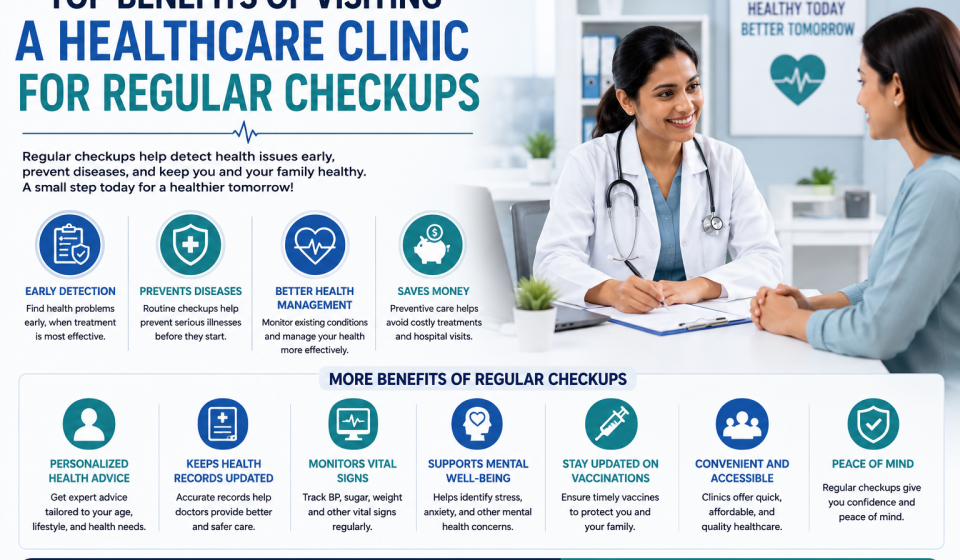
One of the biggest benefits of regular checkups is early detection. Many conditions such as high blood pressure, diabetes, thyroid problems, cholesterol imbalance, kidney issues, and heart disease may not show clear symptoms at first.
During a routine checkup, doctors can identify warning signs through physical examination, medical history, and basic tests. Early diagnosis allows treatment to begin before the condition becomes serious.
When health problems are detected early, treatment is usually simpler, more affordable, and more effective.
Prevention Is Better Than Cure
Regular healthcare clinic visits support preventive care. Instead of waiting for illness, preventive care focuses on reducing the risk of disease.
Doctors may suggest lifestyle changes, vaccinations, health screenings, diet improvements, exercise plans, and stress management techniques. These steps can help prevent future health problems.
Preventive healthcare is especially important for people with family history of diabetes, heart disease, obesity, cancer, or high blood pressure.
Better Management of Chronic Diseases
People with chronic conditions need regular monitoring. Healthcare clinics help patients manage diseases such as diabetes, hypertension, asthma, arthritis, thyroid disorders, and heart-related conditions.
Regular checkups allow doctors to track progress, adjust medicines, review test results, and prevent complications. For example, a diabetic patient needs regular blood sugar checks, foot care advice, diet guidance, and eye screening.
Consistent follow-up helps patients stay healthier and avoid emergency situations.
Improved Doctor-Patient Relationship
Regular visits help build trust between patients and doctors. When a doctor understands your medical history, lifestyle, family background, and previous treatments, they can provide better care.
A strong doctor-patient relationship makes it easier to discuss symptoms, ask questions, and follow medical advice. Patients also feel more comfortable sharing concerns during regular visits.
This long-term relationship improves communication and treatment quality.
Saves Money in the Long Run
Some people avoid checkups because they think they are an extra expense. However, regular checkups can save money over time.
Early treatment is often less expensive than advanced disease treatment. For example, controlling high blood pressure early can help prevent costly heart complications later.
Preventive care reduces the risk of hospital admissions, emergency visits, surgeries, and long-term complications.
Personalized Health Advice
Every person has different health needs. During regular checkups, doctors provide personalized advice based on age, weight, lifestyle, family history, medical condition, and test results.
This may include diet plans, exercise suggestions, sleep advice, stress control, vaccination recommendations, and screening schedules.
Personalized guidance helps people make better daily health choices.
Keeps Health Records Updated
Regular clinic visits help maintain updated health records. These records include previous illnesses, allergies, medications, test reports, vaccinations, and treatment history.
Updated records are very useful during emergencies or specialist consultations. They help doctors make quick and accurate decisions.
Modern clinics often use digital health records, making it easier to track patient history and follow-up needs.
Helps Monitor Vital Signs
Routine checkups include basic measurements such as blood pressure, weight, body mass index, pulse rate, oxygen level, and temperature.
These simple checks can reveal important health information. For example, sudden weight gain may indicate lifestyle imbalance or hormonal issues. High blood pressure may point to heart-related risks.
Monitoring vital signs regularly helps identify changes before they become serious.
Supports Mental Health Awareness
Healthcare clinics are not only for physical health. Regular checkups can also help identify signs of stress, anxiety, depression, sleep problems, and emotional imbalance.
Many people ignore mental health symptoms until they affect daily life. During regular visits, doctors may ask about sleep, mood, energy, appetite, and stress levels.
Early support for mental health can improve overall well-being and quality of life.
Better Vaccination and Immunization Tracking
Vaccinations are important for children, adults, elderly people, and people with certain medical conditions. Regular clinic visits help ensure that vaccines are updated.
Doctors can recommend vaccines based on age, health status, travel plans, and risk factors. This may include flu shots, hepatitis vaccines, tetanus boosters, and other preventive vaccines.
Proper immunization helps protect individuals and communities from preventable diseases.
Health Education and Awareness
Healthcare clinics provide valuable health education. Doctors and healthcare staff can explain symptoms, risk factors, medicines, diet, exercise, hygiene, and disease prevention.
When patients understand their health better, they are more likely to make informed decisions. Education also helps reduce fear, confusion, and misinformation.
Regular checkups give patients an opportunity to ask questions and learn how to stay healthier.
Helps Detect Lifestyle-Related Risks
Modern lifestyles often include long sitting hours, poor diet, lack of exercise, stress, irregular sleep, and excessive screen time. These habits can increase the risk of obesity, diabetes, heart disease, and mental fatigue.
Regular checkups help doctors identify lifestyle-related risks early. They can guide patients toward healthier habits before serious problems develop.
Small lifestyle changes can create major long-term health benefits.
Convenience and Easy Access
Healthcare clinics are usually easier to access than large hospitals. Many clinics offer quick appointments, shorter waiting times, online booking, lab tests, pharmacy support, and follow-up care.
This convenience encourages people to seek medical help sooner. Clinics are also helpful for families because they can provide care for different age groups in one place.
Easy access makes regular healthcare more practical and less stressful.
Reduces Emergency Health Risks
Many emergencies happen because warning signs were ignored for too long. Regular checkups reduce this risk by identifying health issues early.
For example, uncontrolled diabetes, high blood pressure, or high cholesterol can lead to serious complications if not monitored. Regular clinic visits help prevent sudden health crises.
Prevention and monitoring are powerful tools for long-term safety.
Encourages a Healthier Lifestyle
When people visit clinics regularly, they become more aware of their health. Regular checkups encourage better habits such as eating healthy, exercising, sleeping properly, drinking enough water, and managing stress.
Knowing your health numbers can motivate you to improve. For example, seeing improved blood sugar or cholesterol levels can encourage continued healthy behavior.
Healthcare clinics act as partners in your wellness journey.
Family Health Support
Healthcare clinics are useful for complete family care. Children need growth monitoring and vaccinations. Adults need lifestyle and preventive screenings. Elderly people need regular monitoring for chronic conditions.
Family clinic visits make it easier to manage everyone’s health in an organized way. Doctors can also understand family medical history and identify inherited risk factors.
This helps create a healthier family environment.
Builds Confidence and Peace of Mind
Regular checkups provide peace of mind. When you know your health status, you feel more confident and less worried about hidden problems.
Even if a problem is found, early awareness allows you to take action. This reduces fear and helps you stay in control of your health.
Peace of mind is an important benefit of preventive healthcare.
source
https://sl1nk.com/v611j24
https://sl1nk.com/onvh1im
https://l1nq.com/srbz65u
https://l1nq.com/av1lkso
Conclusion
Visiting a healthcare clinic for regular checkups is one of the smartest ways to protect your health. Regular checkups help detect diseases early, prevent future problems, manage chronic conditions, update health records, monitor vital signs, and support mental and physical well-being.
Healthcare clinics provide convenient, affordable, and personalized care for individuals and families. They help people move from reactive healthcare to preventive healthcare.
Instead of waiting until symptoms become serious, regular checkups allow you to stay informed, take action early, and live a healthier life. Making clinic visits a routine part of your lifestyle can lead to better health, lower medical costs, and greater peace of mind.
Frequently Asked Questions
1. Why are regular healthcare checkups important?
Regular checkups help detect health problems early, prevent diseases, monitor existing conditions, and support long-term wellness.
2. How often should I visit a healthcare clinic for a checkup?
Most adults should consider a general checkup once a year, but people with chronic conditions may need more frequent visits based on doctor advice.
3. What tests are included in a regular health checkup?
Common checks may include blood pressure, weight, blood sugar, cholesterol, blood tests, urine tests, and other screenings based on age and health risks.
4. Can regular checkups prevent serious diseases?
Regular checkups can help identify risk factors early and support preventive action, reducing the chances of serious complications.
5. Are healthcare clinics good for family checkups?
Yes. Healthcare clinics are convenient for family checkups, vaccinations, preventive care, chronic disease monitoring, and general health advice.