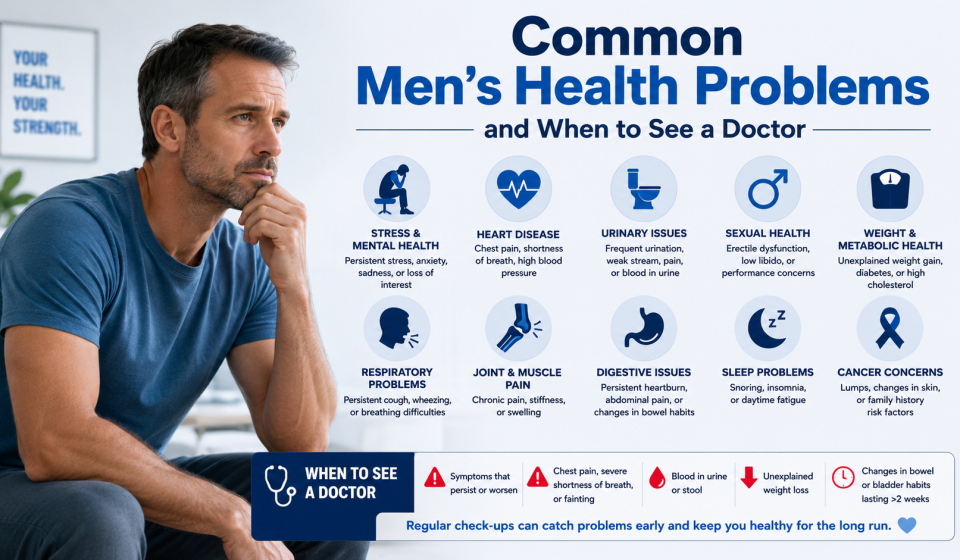

Learn about the most common men’s health problems, their symptoms, risk factors, and when to seek medical attention. Discover practical tips to maintain long-term health and prevent serious complications.
Men often prioritize work, family responsibilities, and daily commitments over their health. As a result, many health issues go unnoticed until they become serious. Regular health checkups and awareness of common medical conditions can help men detect problems early and improve their quality of life.
Many health conditions affecting men are preventable or manageable when identified in their early stages. Understanding the warning signs and knowing when to consult a healthcare professional can make a significant difference in treatment outcomes.
This article explores common men’s health problems, their symptoms, risk factors, and situations where medical attention is necessary.
Why Men’s Health Matters
Men generally have a shorter life expectancy than women and are more likely to engage in behaviors that increase health risks, such as smoking, excessive alcohol consumption, unhealthy diets, and physical inactivity. Additionally, many men delay visiting a doctor due to busy schedules, fear, or the belief that symptoms will resolve on their own.
Preventive healthcare and early diagnosis are key to maintaining physical and mental well-being throughout life.
1. Heart Disease
Heart disease remains one of the leading causes of death among men worldwide. Conditions such as coronary artery disease, heart attacks, and high blood pressure significantly impact men’s health.
Common Symptoms
- Chest pain or discomfort
- Shortness of breath
- Fatigue
- Dizziness
- Irregular heartbeat
- Swelling in the legs or feet
Risk Factors
- Smoking
- Obesity
- High cholesterol
- Diabetes
- Family history of heart disease
- Lack of exercise
When to See a Doctor
Seek immediate medical attention if you experience chest pain, difficulty breathing, or symptoms of a heart attack. Regular blood pressure and cholesterol screenings are recommended, especially after age 40.
2. High Blood Pressure (Hypertension)
High blood pressure is often called the “silent killer” because it may not cause noticeable symptoms for years.
Symptoms
Many individuals experience no symptoms. In severe cases, symptoms may include:
- Headaches
- Vision problems
- Shortness of breath
- Nosebleeds
Risk Factors
- Excess salt intake
- Stress
- Obesity
- Smoking
- Excessive alcohol use
When to See a Doctor
Routine blood pressure checks are essential. Consult a healthcare provider if your blood pressure readings consistently exceed normal levels.
3. Diabetes
Type 2 diabetes is increasingly common among men due to lifestyle factors such as obesity and poor dietary habits.
Symptoms
- Increased thirst
- Frequent urination
- Fatigue
- Blurred vision
- Slow-healing wounds
- Unexplained weight loss
Risk Factors
- Family history
- Obesity
- Physical inactivity
- High blood pressure
When to See a Doctor
If you notice persistent thirst, frequent urination, or unexplained fatigue, schedule a medical evaluation. Early management helps prevent complications involving the kidneys, nerves, and eyes.
4. Prostate Problems
The prostate gland plays an important role in male reproductive health. As men age, prostate-related conditions become more common.
Common Prostate Conditions
- Benign Prostatic Hyperplasia (BPH)
- Prostatitis
- Prostate Cancer
Symptoms
- Frequent urination
- Difficulty starting urination
- Weak urine flow
- Blood in urine
- Pelvic discomfort
When to See a Doctor
Men over 50 should discuss prostate screening with their healthcare provider. Immediate evaluation is necessary if blood appears in the urine or urinary difficulties become severe.
5. Erectile Dysfunction (ED)
Erectile dysfunction affects millions of men and can impact both physical and emotional well-being.
Causes
- Diabetes
- Heart disease
- Stress
- Anxiety
- Depression
- Hormonal imbalances
Symptoms
- Difficulty achieving an erection
- Difficulty maintaining an erection
- Reduced sexual desire
When to See a Doctor
Occasional erectile difficulties are common, but persistent problems should be evaluated. ED may signal underlying cardiovascular disease or diabetes.
6. Obesity
Obesity increases the risk of several serious health conditions, including diabetes, heart disease, sleep apnea, and certain cancers.
Signs
- Excess body fat
- Fatigue
- Reduced physical activity
- Joint pain
Health Risks
- High blood pressure
- Diabetes
- Stroke
- Liver disease
When to See a Doctor
If weight gain affects daily life or contributes to other health problems, consult a healthcare professional for a personalized weight management plan.
7. Mental Health Disorders
Mental health is often overlooked among men. Social expectations and stigma may prevent men from seeking help for emotional concerns.
Common Mental Health Issues
- Depression
- Anxiety
- Stress-related disorders
- Substance abuse
Symptoms
- Persistent sadness
- Irritability
- Difficulty concentrating
- Sleep disturbances
- Loss of interest in activities
When to See a Doctor
Seek professional help if emotional symptoms persist for more than two weeks or interfere with work, relationships, or daily functioning.
8. Sleep Apnea
Sleep apnea is a condition in which breathing repeatedly stops and starts during sleep.
Symptoms
- Loud snoring
- Excessive daytime sleepiness
- Morning headaches
- Difficulty concentrating
Risk Factors
- Obesity
- Smoking
- Family history
- Large neck circumference
When to See a Doctor
Persistent snoring combined with daytime fatigue should be evaluated. Untreated sleep apnea increases the risk of heart disease and stroke.
9. Lung Diseases
Men who smoke or have long-term exposure to pollutants face an increased risk of respiratory diseases.
Common Conditions
- Chronic Obstructive Pulmonary Disease (COPD)
- Lung Cancer
- Chronic Bronchitis
Symptoms
- Persistent cough
- Wheezing
- Shortness of breath
- Chest discomfort
When to See a Doctor
A cough lasting more than three weeks or coughing up blood requires immediate medical attention.
10. Skin Cancer
Skin cancer is one of the most common cancers among men, particularly those with prolonged sun exposure.
Warning Signs
- New moles
- Changes in existing moles
- Non-healing sores
- Unusual skin growths
Prevention
- Use sunscreen daily
- Wear protective clothing
- Avoid excessive sun exposure
When to See a Doctor
Any suspicious skin changes should be examined by a dermatologist promptly.
11. Testicular Problems
Although less common, testicular conditions can affect men of all ages.
Symptoms
- Testicular lumps
- Swelling
- Pain
- Heaviness in the scrotum
When to See a Doctor
Any unusual lump or persistent discomfort should be evaluated immediately. Early detection significantly improves outcomes for testicular cancer.
12. Digestive Disorders
Digestive issues can affect quality of life and sometimes indicate serious underlying conditions.
Common Problems
- Acid reflux
- Irritable bowel syndrome
- Ulcers
- Colon cancer
Symptoms
- Persistent stomach pain
- Heartburn
- Blood in stool
- Unexplained weight loss
When to See a Doctor
Persistent digestive symptoms lasting several weeks should be assessed by a healthcare provider.
Preventive Health Tips for Men
Maintaining good health often involves consistent lifestyle habits.
Healthy Practices
- Exercise at least 150 minutes per week.
- Eat a balanced diet rich in fruits and vegetables.
- Maintain a healthy weight.
- Avoid smoking and excessive alcohol consumption.
- Get adequate sleep.
- Manage stress effectively.
- Attend routine health screenings.
Recommended Screenings
Depending on age and risk factors, men may benefit from:
- Blood pressure checks
- Cholesterol testing
- Diabetes screening
- Colon cancer screening
- Prostate health evaluation
- Skin examinations
Warning Signs That Should Never Be Ignored
Regardless of age, seek immediate medical attention if you experience:
- Chest pain
- Difficulty breathing
- Sudden weakness or numbness
- Severe headaches
- Blood in urine or stool
- Unexplained weight loss
- Persistent fatigue
Ignoring these symptoms can lead to delayed diagnosis and more serious health complications.
Sources
Conclusion
Men’s health encompasses much more than occasional doctor visits. Conditions such as heart disease, diabetes, prostate disorders, obesity, mental health challenges, and respiratory illnesses can significantly affect overall well-being if left untreated. The good news is that many of these conditions can be prevented, managed, or successfully treated through healthy lifestyle choices and regular medical care.
Recognizing symptoms early and seeking professional medical advice when necessary can improve outcomes and enhance quality of life. Rather than waiting until symptoms become severe, men should prioritize preventive healthcare, routine screenings, and open communication with healthcare providers. Taking proactive steps today can lead to a healthier and longer future.
Frequently Asked Questions (FAQs)
1. What is the most common health problem among men?
Heart disease is one of the most common and serious health problems affecting men worldwide.
2. How often should men have a health checkup?
Most adults should have an annual health examination, although the frequency may vary based on age, medical history, and risk factors.
3. At what age should men start prostate screenings?
Many healthcare providers recommend discussing prostate screening options around age 50, or earlier for high-risk individuals.
4. Can stress affect men’s physical health?
Yes. Chronic stress can contribute to high blood pressure, heart disease, sleep problems, digestive issues, and mental health disorders.
5. When should a man see a doctor for erectile dysfunction?
A doctor should be consulted if erectile dysfunction becomes persistent, affects quality of life, or is accompanied by other health concerns.